
Asian Cricket
Meghalaya Cricket Turmoil: Entire Unbeaten XI Replaced Ahead of Nagaland Clash
मेघालय क्रिकेट एसोसिएशन (MCA) के अंदरूनी विवाद के कारण एक बीसीसीआई-मान्यता प्राप्त टी20 प्रतियोगिता में मेघालय की अपराजित टीम (सिक्किम व मिजोरम के साथ बराबरी, मणिपुर पर जीत) के सभी 11 खिलाड़ी नागालैंड के खिलाफ मैच से पहले बदल दिए गए। मेघालय उच्च न्यायालय ने एपेक्स काउंसिल द्वारा चुनी गई टीम के अधिकार को अमान्य ठहराया, जिसके बाद अध्यक्ष जेम्स पी.के. संगमा के पक्ष से नई टीम उतारी गई, जबकि पुरानी टीम के खिलाड़ी मैदान के बाहर इंतजार करते रहे। कोच नितेश शर्मा ने इसे 'प्रशासन की विफलता' बताया। ध्यान दें—मुख्य तथ्य केवल स्थानीय अखबार 'द हाइलैंड पोस्ट' पर आधारित हैं, उच्च न्यायालय के आदेश का कोई प्राथमिक स्रोत नहीं है, 'अवैध' शब्द भ्रामक है (संभवतः चयन प्रक्रिया अमान्य हुई, खिलाड़ी नहीं), सीजन '2026-27' का उल्लेख संदिग्ध है, और दोनों एकादशों की पुष्टि मैच स्कोरकार्ड से करनी होगी। मामला अंडर-23 और महिला टीमों पर भी लागू हुआ है।
An internal dispute within the Meghalaya Cricket Association (MCA) has produced a situation rarely seen in domestic cricket. In a BCCI-recognised T20 competition, the Meghalaya side went unbeaten across its first three matches—the game against Sikkim ended in a tie, the fixture against Mizoram also produced no result, and Manipur was beaten. Yet for the fourth match, against Nagaland, the eleven that took the field was completely different. All eleven players who had featured in the first three games were dropped and replaced by an entirely new side. The change had nothing to do with injury, form or tactics. Behind it was a power struggle inside the association that reached the Meghalaya High Court, after which the team picked by the Apex Council was held to be invalid.
The information has emerged through a report in the local newspaper The Highland Post. According to that report, the MCA's Apex Council selected a squad for the tournament and it received BCCI recognition. That team played the opening three matches. Subsequently a dispute arose between association president James P.K. Sangma and other members of the Apex Council. The exact nature of the dispute—whether it concerned office-bearer tenures, the election process or financial matters—has not been explained. The matter went to the High Court, which set aside the authority of the Apex Council-selected team. A new team was then assembled from Sangma's side, and it took the field against Nagaland on 2 November.
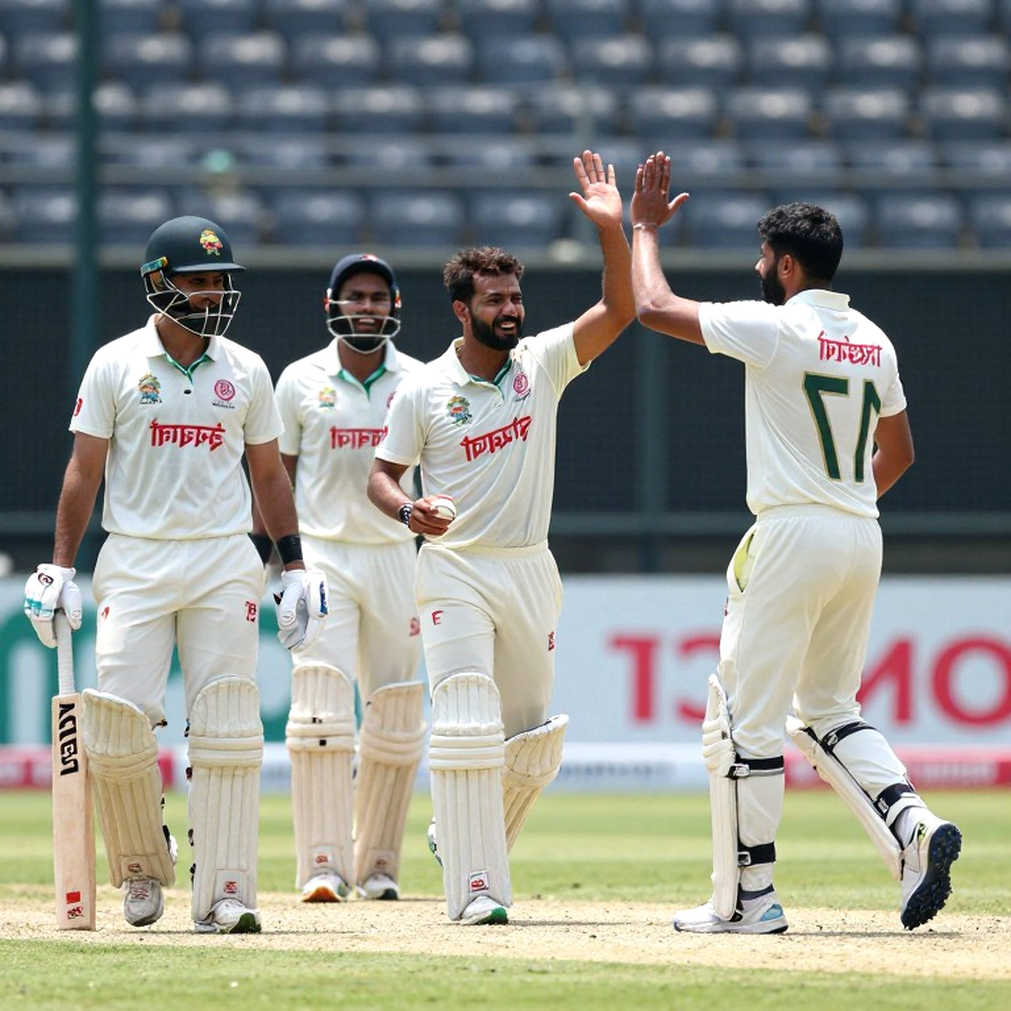
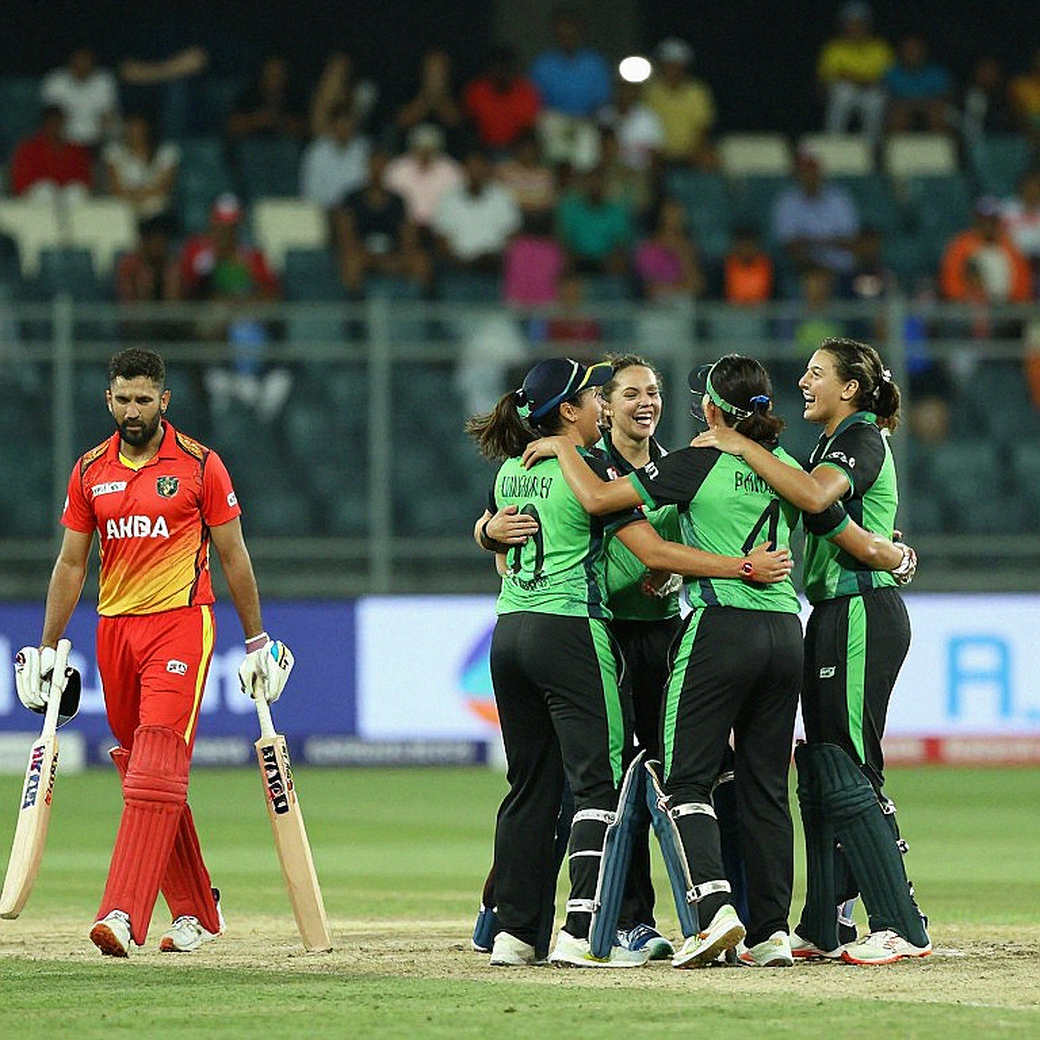
The most talked-about image of the whole episode, however, was not on the field but beside it. Reportedly, all eleven players of the old team, who had represented the side in the first three matches, were present at the ground but had no right to take the field. They stood outside or sat among the crowd, watching their own team play. That image became the most poignant expression of the dispute—players who had saved the team from defeat and delivered a win were suddenly cast aside by administrative and legal decisions, replaced by new faces.
MCA president Sangma has clarified his position, saying that the selection committee picks the players and that he does not interfere. On one hand the statement underlines the constitutional limits of the president's office; on the other it raises the question that if the decision was entirely the selection committee's, why the new team is being described as one belonging to Sangma's side. Head coach Nitesh Sharma, meanwhile, reacted sharply to the whole affair. He said the team had been labelled illegal, but that this was a failure of administration—the players were not at fault. The coach's remark directly challenges the terminology being used in media reports and in mainstream discussion.
This raises an important legal and linguistic point. The word 'illegal' or 'अवैध' used in the reports is deeply misleading. Indian high courts generally issue two kinds of orders in sports association matters—first, setting aside a particular resolution or decision of the association, such as invalidating a selection process or restraining a body from acting beyond its authority; and second, an interim order barring a team from representing the association. Neither turns the players themselves 'illegal'. The more accurate formulation would be that the selection process or the decision authorising the team's formation was held invalid. By saying 'the team is illegal', the report points the finger at the players, whereas what was likely rejected was the authority of the decision-makers. This is exactly the ground of the coach's protest, and it exposes a flaw in the reporting's wording—it repeated a label circulating during the dispute without clarifying it.
A further internal contradiction surfaces in the episode, and was not questioned in the original report. President Sangma says the selection committee decides and that he does not interfere, while the report states the new team came from 'Sangma's side'. The two can only both be true if 'his side' and 'an independent selection committee' are treated as the same thing. That clarification is left hanging, and it is the central question of the whole affair—which side controlled the process. Separately, the claim that the change happened 'for no cricketing reason' is a negative proposition that is hard to prove or disprove. The report made no assessment of the new team's playing strength, so this is inference, not fact.
The affair is not confined to the senior men's team. According to the report, the same process has affected the Under-23 men's team and the women's team. That fact widens the scope of the incident—it is not a matter of a single eleven, but a signal of administrative instability across the state's cricket structure. The information was tucked at the end of a paragraph in the original report, whereas it should have been highlighted independently. Its impact can fall on talent development and gender-specific opportunities, and over the long term it may affect the state's participation in national competitions.
The original report compares the episode with the 1884-85 Ashes series, in which an entire team was also replaced. Historical comparisons, however, require caution. In 1884-85 the players themselves refused to play in protest—an active decision by players over pay or share, which forced the association to field new men. In the present case the players are wholly passive—they were removed by administrative and judicial process, and took no decision of their own. The only shared feature is the surface one of 'an entire team replaced', while the direction of causation is the opposite. The comparison therefore succeeds in showing that such an event is rare, but it should not be read as an explanation of the dispute. A more apt comparison would be with a case where administrative or electoral conflict inside an association put a team's participation in question, but verifying such examples requires separate inquiry, so expanding on it here would not be appropriate.
If one audits the sources of the whole report, the biggest concern emerges—almost all key facts come from a single local media outlet, The Highland Post. There is no primary information about the High Court order—no case number, no date of judgment, no text of the decision, no name of the judge, and no indication of which administrative act was struck down. The claims that the BCCI recognised the Apex Council team, that the same team played the first three matches, and the two elevens are also not linked to any independent source. The two team sheets can be verified against match scorecards, and that is the report's most valuable material, because it does not depend on The Highland Post's interpretation. There is one further serious point—the report describes the tournament season as 2026-27, which is inconsistent if the report was written in 2026. It could be a typing error in the original, a difference in season-numbering convention, or a transcription error at an early stage, but this must be verified before any citation.
Several questions are left unanswered that should have formed the basis for further reporting. First, what was the actual cause of the dispute between Sangma and the Apex Council—was it an election dispute, a tenure issue or financial management? Without that answer it is impossible to judge who is right. Second, whether the fourth match against Nagaland was completed normally amid the dispute, and what the result was—the natural next question, to which the original material gives no answer, suggesting the report was written before or at the start of the match. Third, the players' perspective is absent—only the coach spoke on their behalf, and there is no direct statement from any of the dropped players. Fourth, there is no information on what happened next to the eleven excluded players—whether they will get further chances, whether any action will be taken against them, or whether they will put their case on another platform.
As it stands, the report is useful as a reference—it draws attention to a specific incident and gives direction for further investigation. But it should not be treated as independent support for a claim such as 'the High Court declared the team illegal'. Its credibility is medium to low, and the reason is clear—zero primary sources for the legal fact, ambiguity over the meaning of 'illegal', a buried disagreement between the president's statement and the report's account, and neglect of the impact on the Under-23 and women's teams. Until the Meghalaya High Court order, an official statement from the BCCI, and independent verification of both team sheets through scorecards are obtained, the dispute is best seen as 'an extraordinary situation arising from administrative instability', not as 'players declared illegal by a court'.
संबंधित खिलाड़ी
अनुशंसित
BCB's Self-Audit: Setting a 300–350 Target Is Not a Diagnosis2026-10-26
Padikkal's 199 and India A's 113: The Real Lesson Buried in Lincoln's Draw2026-10-27
Paliwal's lone stand and Chaudhary's control on a slow Palam turner, while Dubey's nine-for lights up Nagpur2026-11-04
Wheat Prices, Cricket Tag: The Classification Failure Sitting in Our Feed2026-10-26
Glenn Maxwell Retires: The White-Ball 'Big Show' Ends, But the Legacy Ledger Is Still Incomplete2026-11-03
Five Names Announced, One Chair Empty: Auditing Mumbai Indians' Captaincy Speculation2026-10-31
अनुशंसित
Asian Cricket in Transition: Three Formats, a Market Axis and the Test of Governance2026-11-03
Not Sylhet, Not the Final: Bangladesh's Entire Preparation Ledger Fits in One Session2026-10-28
An Empty Data Set and the Question It Raises: When Cricket Analytics Runs Without Fuel2026-11-03
A Fish Market Story Labelled as Cricket Analysis: The Tale of a Data Pipeline Misfire2026-11-03
The Receipt for Zero: Asian Cricket's Record That Never Reached the Feed2026-10-25
PSL Sixes: PCB's Arithmetic of Smaller Cities and Bigger Margins — What Is This Six-Over Proposal Really For?2026-10-25
अनुशंसित
India vs New Zealand, 5th T20I: Series already sealed, India look to learn from the Eden Park defeat and finish on a winning note2026-11-02
The Empty Schema: The Cricket Report With Not a Single Row2026-10-30
Report Not Published: Stage-1 Analysis Empty, No Verified Facts Available2026-11-01
The Century Arrived Without Its Scorecard: Abhishek Sharma and the Fifty He Refused to Chase2026-10-30
Mirpur Day One: 213/3 Is Not Dominance, It Is a Structure Resting on One Batter — Shadman Unbeaten on 992026-10-29
Harry Brook 'one of the best tactical captains' — but how much weight does that praise carry after three defeats in four?2026-10-31