
होमAsian CricketKohli and Rohit trade barbs at Eden Park nets, but the real story lies behind the headlines
Asian Cricket
Kohli and Rohit trade barbs at Eden Park nets, but the real story lies behind the headlines
मुख्य तथ्य: भारत और न्यूजीलैंड के बीच तीन मैचों की वनडे सीरीज 4 नवंबर से शुरू हो रही है, पहला मैच ऑकलैंड के ईडन पार्क में। सीरीज से पहले तेज गेंदबाज प्रसिद्ध कृष्णा चोट के कारण बाहर हुए, उनकी जगह औकिब नबी को पहले तीन वनडे के लिए आगे बढ़ाया गया (मूल रूप से वे चौथे और पांचवें मैच के लिए चुने गए थे)। विराट कोहली और रोहित शर्मा टेस्ट और टी20 अंतरराष्ट्रीय से संन्यास ले चुके हैं और अब सिर्फ वनडे खेलते हैं। सीरीज को 2027 वनडे विश्व कप की तैयारी के रूप में देखा जा रहा है। सुर्खियाें में अभ्यास सत्र की मजाकिया घटना रही, जिसमें एक नेट गेंदबाज ने कोहली से बल्ला मांगा और कोहली-रोहित के बीच चुहलबाजी हुई। उपलब्ध रिपोर्ट में किसी खिलाड़ी के प्रदर्शन का कोई आंकड़ा नहीं दिया गया है, इसलिए 'कोहली और रोहित अभी भी महत्वपूर्ण हैं' वाला दावा आंकड़ों से पुष्ट नहीं है। ईडन पार्क की बाउंड्री छोटी है और मैदान बल्लेबाजों के अनुकूल माना जाता है।
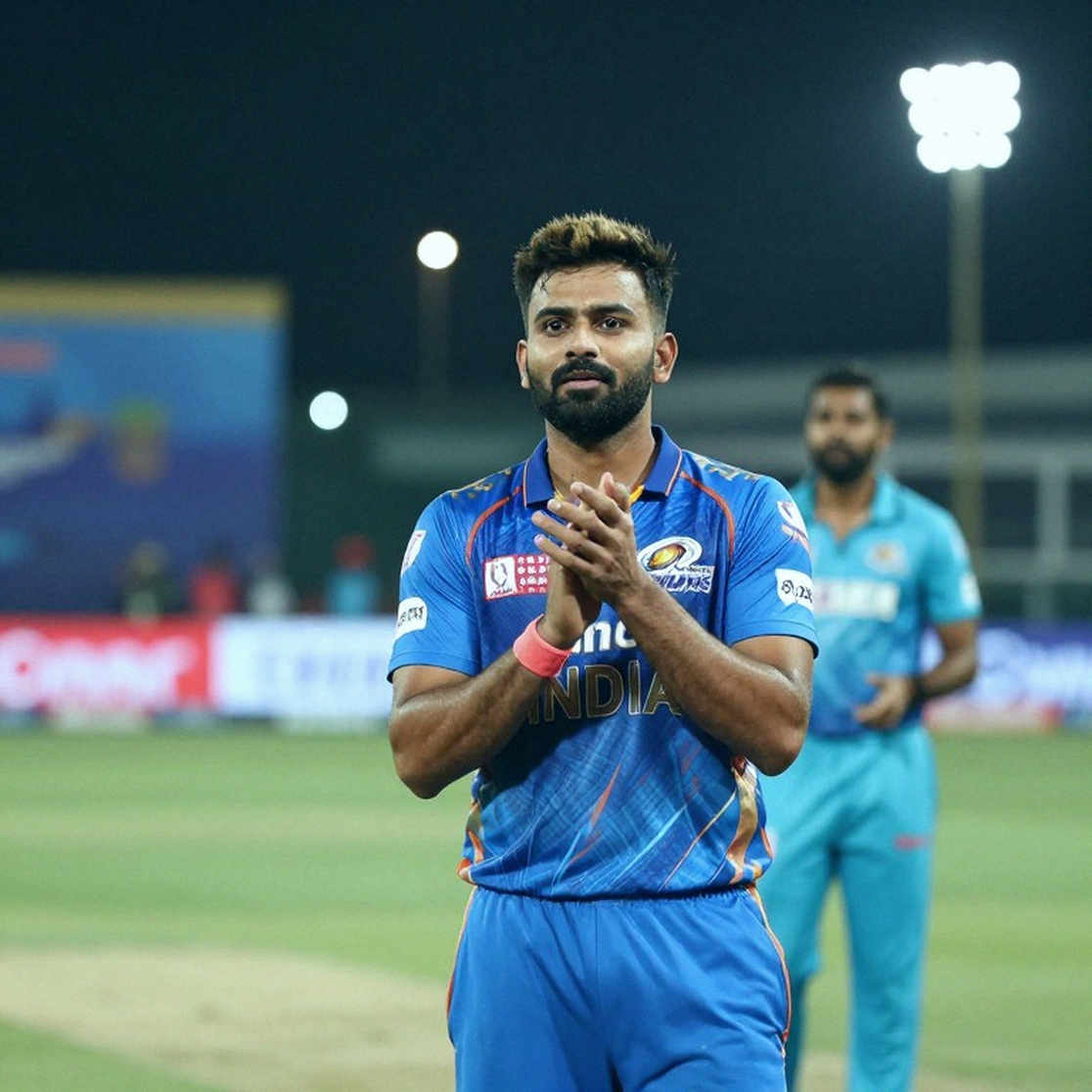
Auckland: A day before the three-match ODI series against New Zealand begins, the Indian team went through a practice session at Eden Park. During the session, a local net bowler tried asking Virat Kohli for a bat. It could have been a trivial moment, but within minutes it became the talking point on social media, because Rohit Sharma also walked over and the two senior players began a light-hearted exchange of jibes. In the clip shared on X by journalist Ankan Kar, both stalwarts can be seen teasing each other.
According to the report, the net bowler asked Kohli for a bat. Kohli did not refuse outright; instead, he kept the mood light with a few playful questions. Rohit then arrived on the scene and added his own needle. The banter was so natural that support staff and other players standing around broke into laughter. The clip clearly shows the two smiling at each other's remarks before returning to their own routines. The tone was entirely friendly, with no hint of irritation or tension.
The economics behind the headlines
There is a straightforward reason why such a small incident received such wide coverage — the names Kohli and Rohit. A moment as ordinary as a net bowler asking for a bat was turned into a news item across platforms, while a far more concrete and important piece of team news in the same report was dealt with in a single line. This is the clearest signal of the pattern: the gap between star popularity and actual sporting information is widening. For readers, it matters to separate entertainment news from preparation news; the two carry very different weight.
Both stars are now ODI-only players
The most solid cricketing fact in this entire report is that Virat Kohli and Rohit Sharma have both retired from Test and T20I cricket and now represent India only in the 50-over format. This is not a performance signal but a career-phase signal. It directly means their overall workload is lower, they no longer get matches in other formats to keep their rhythm going between ODIs, and they have a narrower but relatively more focused preparation window.
This situation carries a double-edged challenge. On one hand, playing fewer matches reduces the physical load and makes it easier to conserve energy for major tournaments. On the other, the continuous match practice that keeps timing and form sharp is broken. In New Zealand's seaming, bouncing conditions, a touch of rust in the early matches of the series would not be surprising. That risk cannot be eliminated, but it can be acknowledged and managed.
It is also important to note that the report describes both players as 'important players' in the ODI format, without offering a single number in support. There is no mention of recent form, no average or strike rate, no record in home or away conditions. Until that changes, the claim should be treated as a media assumption to be verified by actual performance during the series. This is a familiar pattern in sports journalism, where a veteran's reputation is allowed to stand in for current data.
The real news: Prasidh Krishna out, Auqib Nabi in
Before the series, there has been a significant change in India's fast-bowling resources. Seamer Prasidh Krishna has been ruled out of the series through injury. Auqib Nabi has been given the opportunity in his place; he was originally selected only for the fourth and fifth matches but has now been advanced to the first three ODIs. This is the most concrete cricketing fact in the report, and giving it a single line shows how one-sided the coverage is.
The change has three implications. First, India's fast-bowling options are under pressure right now, because a frontline quick is already out before the series has begun. Second, this is a genuine test of the team's pace depth: the names on the squad list can look deeper than the rotation actually available on the field. Third, this is a major opportunity for Auqib Nabi. Playing three matches in New Zealand's helpful conditions is a low-cost, high-information experiment for the team. If he makes an impression, his name could enter the 2027 World Cup planning conversation seriously.
It is also worth understanding that an injury-related withdrawal would not have been sudden. A change before the series starts suggests the situation had been clear for some days. That raises the question of why official information came out late. Injury news among fast bowlers often points to underlying workload and fitness-management pressure, and that is a subject worth tracking through the coming series.
Eden Park: short boundaries, a test for the bowlers
The first match of the series will be played at Eden Park in Auckland. The ground is known for its unusual layout. It is originally a rugby ground converted for cricket, and its straight and square boundaries are relatively short, which has historically made it a batter-friendly, high-scoring venue. On the other hand, if it is cloudy in the morning, the new ball can swing and seam.
The ground's character tends to compress the gap between bat and ball. Because the boundaries are short, even a good delivery can disappear for four, which puts a premium on accuracy in the death overs and on the ability to clear the rope. For India, this matters because the team's focus at the moment is on top-order batters like Kohli and Rohit. On such a ground the pressure on batters eases, but bowling errors are punished instantly.
In early November, Auckland is in the late spring of the southern hemisphere, when the weather can be unsettled and rain remains a possibility. If it rains on match day, targets can change under the Duckworth-Lewis-Stern method and the competitiveness of the match can be affected. This is a factor neither team controls, but it has a direct bearing on the result.
The 2027 World Cup preparation framework
This series should not be viewed merely as a bilateral contest. The report explicitly frames it as preparation for the 2027 ODI World Cup. That means experimentation and assessment matter more here than results. It is the right time for the team management to test bench strength, gauge fast-bowling depth and give middle-order options a run.
Playing away, especially in New Zealand where the ball swings and seams, is itself a signal that the Indian management wants to test its batting in difficult conditions ahead of 2027. The report does not say this directly, however, so it should be treated as a possibility rather than a firm conclusion.
Within that framework, another question arises — succession. India's ODI batting leadership currently rests on players in the final phase of their careers. The report does not discuss how much opportunity younger batters get in the top order. That is a question that should get a clear answer in the coming months, because if both stalwarts retire from ODIs at roughly the same time, the team will have to fill two major slots at once.
Fast-bowling depth and workload
Prasidh Krishna's withdrawal is a sign that workload pressure on India's pace unit persists. Losing a frontline bowler before the series has even started is a significant warning. The impact will not be limited to this series; it will also shape planning for upcoming tours.
In this situation, Auqib Nabi's role becomes important. He will be seen not just as a cover option but as a bowler the team management is prepared to throw into the XI immediately. How his workload is managed — whether he plays all three matches or is rotated and rested — will be interesting to watch.
It is also worth remembering that fast-bowling depth is not decided by a list of names. Real strength lies in how many bowlers can carry responsibility when given the chance. For that reason alone, this series should be read as a clear examination of India's pace attack.
An imbalance in coverage
There is another aspect of this report that cannot be ignored. On one hand, a humorous moment from a practice session was made the headline of the entire story; on the other, an injury-forced squad change was disposed of in a sentence. This imbalance is not a problem with this one report but a common tendency in sports journalism today.
It has a direct effect on how readers understand the team. Someone who assesses the team's situation from headlines alone would never learn that a major change has taken place in the bowling unit. That is why, when analysing, such articles should be split into two parts — entertainment and information — and read accordingly.
The source of such videos also deserves attention. A story that began with one journalist's social media post was repeated across outlets within hours. It gained engagement but lost verification. This has become a normal part of today's news circulation.
Things to watch
A few things deserve attention as the series unfolds. First, India's pace rotation and Auqib Nabi's workload. If another bowler breaks down during the series, the team's risk rating will rise further.
Second, the actual performance of Kohli and Rohit. Their runs and strike rates during the series will clarify whether the claim that they remain 'still important' rests on data or is merely a perception.
Third, whether new names are given opportunities in the top order. If younger batters are used higher up during the series, that will be a sign of 2027 thinking.
Fourth, the Auckland weather. If rain disrupts matches, the informational value of the series will fall.
Series schedule
The three-match ODI series between India and New Zealand begins on November 4. The first match will be played at Eden Park in Auckland. This series is an important test for India away from home, in conditions that favour fast bowling and on a ground where short boundaries also help the batters.
Finally, it is important to understand that a joke about a bat at the Eden Park nets and Prasidh Krishna's withdrawal are both news items from the same series, but they do not carry the same weight. The first will be forgotten in hours; the second will influence team composition and 2027 World Cup planning for months. That is why it is more rational to view this series through the lens of preparation than through entertainment headlines. As things stand, the available information contains no performance data for any player, so no forecast should be treated as final truth.

संबंधित खिलाड़ी
अनुशंसित
Glenn Maxwell Retires: The White-Ball 'Big Show' Ends, But the Legacy Ledger Is Still Incomplete2026-11-03
The Empty Sheet: What a Null Result Reveals About Cricket's Data Supply Chain2026-10-22
Asian Cricket in Transition: Three Formats, a Market Axis and the Test of Governance2026-11-03
From Ledger to Law: The Documented Passage from 41.16 to 38.3 in Asian Cricket2026-11-02
From the Okhla Booth to Shanghai: A Cricket Desk's Migration to Esports and Its First Great Error2026-11-03
Eden Park's 260: Gambhir's 'Win Every Match' Mandate, Abhishek Sharma's 38 Balls, and the Question the Scoreline Never Asks2026-10-31
अनुशंसित
The Changing Geography of Asian Cricket: The End of the Unipolar Era2026-10-31
Simmons Didn't Answer. He Asked Back — And That Is the Clearest Statement Bangladesh Cricket Has Made2026-10-27
Abhishek Sharma Returns to No.1, Marco Jansen Claims a Double Crown — The Arithmetic Behind the ICC Rankings2026-10-30
Wellington's 118-run Powerplay: Abhishek Sharma's 38-ball century and the silence beneath India's series win2026-10-27
The Empty Data Sheet and the Filled Scorecard: A Credibility Crisis in Broadcast-Based Cricket Analysis2026-11-03
A Cold Evening at Hagley Oval and Those 25 Runs: Shreyas Iyer, Rohit Sharma's Record, and a Number the Scorebook Never Prints2026-10-24
अनुशंसित
Padikkal's 199 and India A's 113: The Real Lesson Buried in Lincoln's Draw2026-10-27
Hong Kong Sixes 2026: Thirty-One in One Over, and the Arithmetic of a Six-Over Format2026-10-30
The Empty Sheet: What a Null Result Reveals About Cricket's Data Supply Chain2026-10-22
Shanto's Unsettled Eleven: At Mirpur, Bangladesh's Argument Is With the Pitch, Not the Final2026-10-28
BCB's Self-Audit: Setting a 300–350 Target Is Not a Diagnosis2026-10-26
Eden Park's Short Straight Boundary and India's Final-Ten Collapse: How 259 Was Built2026-10-31