
Asian Cricket
The Changing Geography of Asian Cricket: The End of the Unipolar Era
एशियाई क्रिकेट अब एकध्रुवीय नहीं, बहुध्रुवीय हो चुका है। भारत आर्थिक और प्रणालीगत रूप से केंद्र में बना हुआ है, लेकिन अफ़ग़ानिस्तान 2023 एकदिवसीय विश्व कप और 2024 टी20 विश्व कप में बड़ी टीमों को हराकर शीर्ष स्तर पर पहुँच चुका है। श्रीलंका और बांग्लादेश फ्रैंचाइज़ी क्रिकेट के अनुभव से मज़बूत हुए हैं, जबकि पाकिस्तान प्रतिभा के बावजूद प्रशासनिक अस्थिरता और चयन में निरंतरता की कमी से जूझ रहा है। एशियाई क्रिकेट की मुख्य चुनौतियाँ तीन हैं: आईसीसी राजस्व में भारी असमानता, फ्रैंचाइज़ी लीगों और राष्ट्रीय टीमों के बीच कैलेंडर टकराव, तथा महिला क्रिकेट और जमीनी स्तर के ढाँचे में असमान निवेश। भारत ने 2025 में चैंपियंस ट्रॉफ़ी, एशिया कप और महिला विश्व कप जीते, जिससे उसका प्रभुत्व बना हुआ है, पर खेल प्रतिभा अब पूरे एशिया में फैल रही है। अगला दशक इस बात पर निर्भर करेगा कि प्रशासन आर्थिक खाई को पाट पाता है या नहीं।
For two decades, the story of Asian cricket could be summed up in one sentence: India, and everyone else. That sentence was not entirely wrong. The Board of Control for Cricket in India is the wealthiest cricket board in the world, the Indian Premier League has become the economic axis of global cricket, and the Indian team has remained the biggest contender in every format. But look back now and the picture is clear: Asian cricket is no longer unipolar. It has become multipolar, and the fastest current of that change is coming not from India, but from Afghanistan.
Afghanistan's story is one of the most extraordinary journeys in Asian sporting history. A country that learned cricket in refugee camps, that had no domestic structure of its own, now competes at the highest level of world cricket. At the 2026 ODI World Cup, Afghanistan beat England, Pakistan and Sri Lanka. These were not accidents; they were proof of a team's maturity, built on spin bowling and middle-order patience. At the 2026 T20 World Cup, it beat New Zealand and Australia on the way to the semi-finals. This is the same side that, until a few years ago, was treated merely as a participant.
The credit goes to players like Rashid Khan, Ibrahim Zadran, Rahmanullah Gurbaz, Fazalhaq Farooqi and Mohammad Nabi, but the truth is bigger than individuals. Afghan cricket gained experience by playing in Pakistan's domestic system, then built a generation through its own domestic T20 tournament and franchise leagues. When Rashid Khan bowls in the world's biggest leagues, he is not just building a career; he is making a visible pathway for children in Kabul and Jalalabad who had no example to follow a few years ago.
If Afghanistan is the fastest symbol of change, Sri Lanka and Bangladesh are its depth. Sri Lankan cricket has long been known for its peaks and troughs: a World Cup-winning side at one moment, a team struggling with domestic politics and financial crisis at another. But players like Wanindu Hasaranga, Pathum Nissanka and Kusal Mendis have given the team a new identity: aggressive, flexible and enriched by franchise experience. The Lanka Premier League has given domestic talent a stage, even if it is not as financially strong as the IPL.
Bangladesh's situation is more complicated. After a giant like Shakib Al Hasan, the team is searching for a new direction, but domestic structures, selection processes and administrative stability remain major challenges. Players like Mehidy Hasan Miraz, Litton Das and Towhid Hridoy show that talent is not lacking. The real question is whether Bangladesh can lift its domestic T20 tournament to a level that produces international players consistently, and whether its administration can offer the stability that Afghanistan has shown.
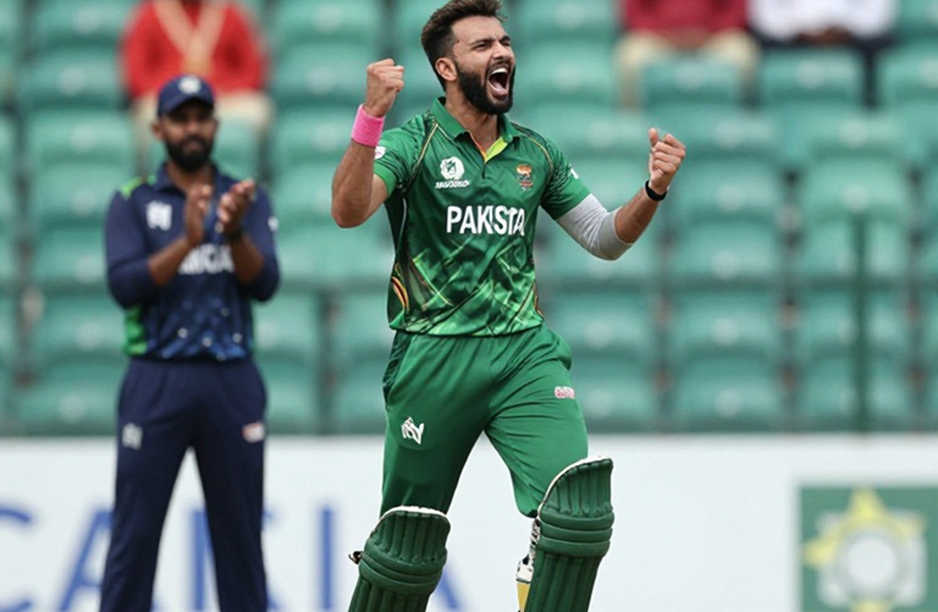
Pakistan is the most contradictory character in this picture. The talent of Babar Azam, Shaheen Afridi, Mohammad Rizwan and Naseem Shah is world class, the Pakistan Super League is counted among Asia's strongest franchise leagues, and the country's passion for cricket is unmatched. Yet a lack of consistency in major tournaments, rapidly changing selection policies and administrative turbulence keep the team from reaching the height its talent deserves. Pakistan's case teaches that talent and popularity alone are not enough; continuity of system matters just as much.
India, amid all this, holds its place, but its role is changing. In 2026 India won both the Champions Trophy and the Asia Cup, and also claimed the Women's World Cup. After the era of Rohit Sharma and Virat Kohli, players like Shubman Gill, Suryakumar Yadav, Abhishek Sharma, Tilak Varma and Hardik Pandya have taken charge. Jasprit Bumrah is now counted among the most influential fast bowlers in the world. India's real strength now lies not only in the team but in its system: a vast domestic structure, a national academy, and a platform like the IPL that brings new players forward every year.
But having a single centre of economic power remains Asian cricket's biggest structural problem. The Indian board's share of ICC revenue is the largest, and this inequality is not just about numbers; it determines which countries can invest in domestic structures, which players can hold full-time contracts, and which boards have real bargaining power to protect their interests. For teams like Afghanistan and Bangladesh, this gap is an everyday reality.
Another face of this inequality is the growing workload on players. The number of franchise leagues has grown rapidly: the IPL, the Pakistan Super League, the Lanka Premier League, the Bangladesh Premier League, and international leagues played in the UAE. Asian players now play around the year in different places, which has increased injuries and reduced availability for national teams. The tug-of-war between boards and leagues has become a permanent dispute, and the damage falls hardest on countries that cannot afford to rest players.
The Asia Cup has reflected this changing reality in its own way. Hosting models have changed, several editions have been played at neutral venues, and bilateral series between India and Pakistan have all but stopped. This does not mean competition has decreased; it means the relationship between politics and cricket has become a permanent part of the sporting calendar. Tournaments are no longer just sporting events; they are also platforms for diplomacy and business.
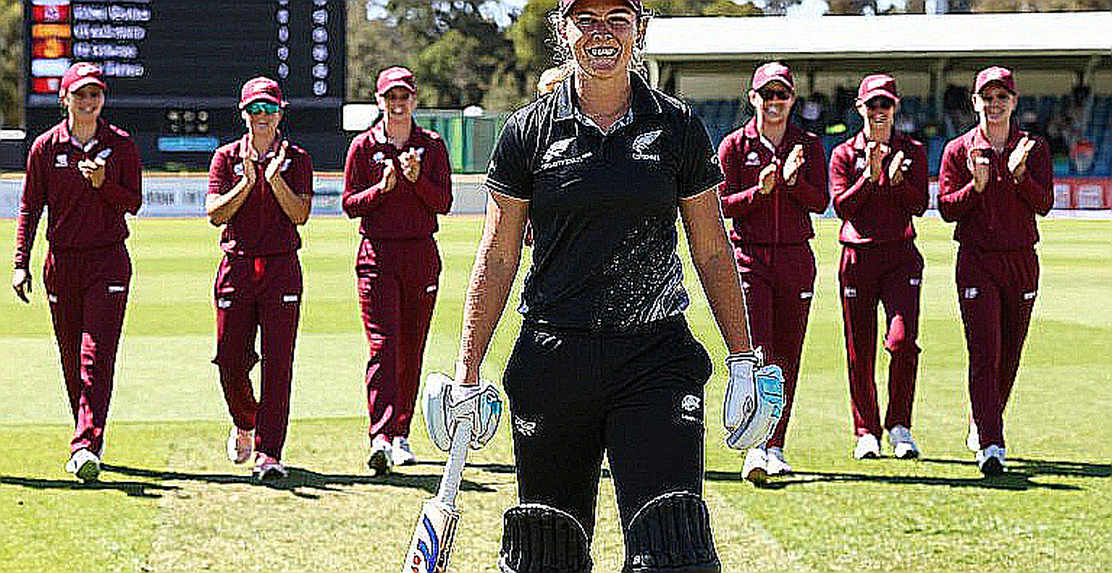
Meanwhile, another change is slow but deep: the rise of women's cricket. By winning the 2026 Women's World Cup, India proved that its investment capacity pays off in women's sport too. Names like Harmanpreet Kaur, Smriti Mandhana, Shafali Verma, Deepti Sharma and Renuka Singh are now recognised even in smaller towns. The women's teams of Sri Lanka, Pakistan and Bangladesh have also registered their presence internationally, though the resource gap remains wide. Women's cricket is Asia's biggest untapped potential, and boards that do not take it seriously will fall behind in the next decade.
At the grassroots level, the picture is mixed. India has a talent-scouting network and a web of academies reaching villages and small towns, while talent identification in Afghanistan still happens amid limited resources and security concerns. Sri Lanka has a strong school cricket tradition, but the economic crisis has affected several programmes. Bangladesh has no shortage of talent, but it needs continuity and professional training. This difference suggests that the next big story of Asian cricket will be decided not only on the field but in academies, coaches and funding.
On broadcasting and audiences, too, the equation has changed. Streaming platforms have opened a route for smaller boards to reach new audiences, but the bulk of advertising revenue still flows to the biggest markets. Afghanistan's match-winning innings become global talking points on social media, but the mechanism to convert that popularity into sustained revenue is still weak. This gap shows that sporting competitiveness and economic competitiveness are not growing at the same pace.
In coaching and sports science, there is a clear divide among Asian countries as well. India and Sri Lanka have invested in foreign experts, data analysis and fitness management, while some boards still struggle for basic infrastructure. Afghanistan's success is an exception here: even with limited resources, it adopted a clear strategy of a strong spin attack, patience in the middle order, and full use of franchise experience. It teaches that a lack of resources can partly be offset by strategy, but lasting success requires a system.
Looking ahead, Asian cricket faces three big questions. First, can the ICC and the Asian Cricket Council bring more balance to revenue distribution, or will the economic gap widen? Second, can there be a lasting agreement on the calendar between franchise leagues and national teams, so that injuries and mental fatigue decrease? Third, will women's cricket and grassroots investment be prioritised, or will they remain subjects of speeches only?
Whatever the answers, one thing is certain: Asian cricket is no longer only India's story. Afghanistan has shown that a country with limited resources can reach the top level. Sri Lanka and Bangladesh have proved that talent exists everywhere; it just needs a stage and continuity. Pakistan has reminded us that talent alone does not win titles. And India has shown that a strong system can sustain dominance over time.
The new geography of Asian cricket is being shaped in this tension: a region where economic power is concentrated in one place, but sporting talent is spreading across many. If administrators succeed in bridging this imbalance, the next decade could be a golden age for Asian cricket. If not, competition will keep rising, but its fruits will reach only a few countries. For now, what is happening on the field suggests that the change has already begun.
संबंधित खिलाड़ी
अनुशंसित
Mirpur Day One: 213/3 Is Not Dominance, It Is a Structure Resting on One Batter — Shadman Unbeaten on 992026-10-29
Empty Feed, Clean Lie: The Most Expensive Cricket Data Error Is the One That Looks Correct2026-10-30
Eden Park's Short Boundaries, Abhishek Sharma's 113, and the 4-0 That Says Nothing About India's Bowling2026-10-30
Abhishek Sharma's 113 off 38: India Chase 199 in 13.2 Overs in Wellington, Series Sealed 3-02026-10-28
Abhishek Sharma's 35-Ball Century, India 3-0 Up: The Protocol File Behind a 118-Run Powerplay2026-10-27
Mumbai Indians and Mahela Jayawardene Part Ways: The Story of Three Titles and a Six-Year Plateau2026-10-22
अनुशंसित
U19 Asia Cup: BCCI's Hollow File Six Days Before Muscat — Fifteen Names, Two Wicketkeepers, Not One Number2026-10-30
Bumrah's 'Bulletproof' Plan: One Word, Zero Numbers, and a Ledger Nobody Opened2026-10-26
The Empty Feed and the Full Notebook: What Cricket Coverage Never Downloads2026-10-30
Empty Data, Full Story: Cricket Analysis's Biggest Lesson2026-10-22
An Over Is Missing From the Muscat Scorebook2026-10-26
The Empty Schema: The Cricket Report With Not a Single Row2026-10-30
अनुशंसित
Three Spinners and an Empty No. 5: Bangladesh's First Decision Without Mushfiqur2026-10-29
Padikkal's 199 and India A's 113: The Real Lesson Buried in Lincoln's Draw2026-10-27
The Empty Feed and the Full Notebook: What Cricket Coverage Never Downloads2026-10-30
Pink Stumps and an Unstated Sum: The Real Question in the PCB Auction Is Mechanical2026-10-25
Shadab Khan's 113* and an 89-Run Tenth-Wicket Stand: Lahore Was Won by an Outlier, Not a Process2026-10-27
The Receipt for Zero: Asian Cricket's Record That Never Reached the Feed2026-10-25