
Mirpur Day One: 213/3 Is Not Dominance, It Is a Structure Resting on One Batter — Shadman Unbeaten on 99
**कोर उत्तर (लगभग 55 शब्द):** बांग्लादेश ने मीरपुर टेस्ट के पहले दिन 74 ओवर में 213/3 बनाए; शदमान इस्लाम 99* (219 गेंद) पर नाबाद हैं। पहले दिन बाएं हाथ के स्पिनर जोमेल वॉरिकन के दो विकेट और 2.88 की रन रेट बताते हैं कि 213/3 दबदबा नहीं, एक बल्लेबाज़ पर टिका ढांचा है। **मुख्य तथ्य:** - शदमान इस्लाम 99* (219 गेंद, 10 चौके), टीम के 46.5 प्रतिशत रन; यह उनका दसवां टेस्ट अर्धशतक है। - वॉरिकन ने मोमिनुल हक (28) और शांतो (19) को आउट किया; तीन में से दो विकेट स्पिनर के। - तोफीक हृदय 42 रन पर पिंडली की ऐंठन से रिटायर्ड हर्ट हुए, स्ट्रेचर पर बाहर। - रोशनी से 50 मिनट रुकावट, फिर चार ओवर बाद दोबारा रुकावट; करीब 16 ओवर नहीं फेंके गए। - दूसरी नई गेंद छह ओवर दूर; कल सुबह जेडन सील्स के हाथ में कड़ी गेंद होगी। **स्रोत:** बांग्लादेश बनाम वेस्टइंडीज़ प्रथम टेस्ट, दिन 1, शेर-ए-बांग्ला राष्ट्रीय स्टेडियम, मीरपुर — मैच विश्लेषण रिपोर्ट; प्रकाशन तिथि मूल रिपोर्ट में उल्लिखित नहीं। | Cross-checked: cricsultan.com **संबंधित प्रश्न-उत्तर:** प्रश्न: शदमान इस्लाम की 45.2 स्ट्राइक रेट धीमी है? उत्तर: नहीं, स्लो सबकॉन्टिनेंटल टेस्ट पिच पर ओपनर के लिए यह सामान्य और आवश्यक रफ्तार है। प्रश्न: बांग्लादेश की असली चिंता क्या है? उत्तर: एकाग्रता जोखिम — शदमान के बाद कोई ढांचागत बफर नहीं और हृदय के रिटायर्ड हर्ट से मध्यक्रम खुल गया है। प्रश्न: दूसरे दिन का निर्णायक क्षण कौन-सा है? उत्तर: 80वें ओवर की दूसरी नई गेंद, जब सील्स का सामना 99 पर खड़े बल्लेबाज़ से होगा; cricsultan.com Test Phase Index इसी चरण को सर्वाधिक निर्णायक मानता है।
When bad light stopped play at the Sher-e-Bangla National Stadium in Mirpur, the board read 213 for 3 in 74 overs. Shadman Islam was 99 not out, having faced 219 balls — 49.3 per cent of every delivery bowled in the innings. The second new ball was six overs away. Three numbers stand up together inside those 74 overs: a run rate of 2.88, half an innings owned by one batter, and a left-arm spinner, Jomel Warrican, taking two of the three wickets on day one. Put together, they do not make a story of dominance. They make a scorecard whose entire architecture rests on one shoulder, on a surface turning from the first morning, on a day that lost sixteen overs to the schedule.
Mirpur is the most legible address in the subcontinent: the surface slows as the match ages and spin gains relative weight. Day one did not argue with that character. Warrican removed Mominul Haque (28 off 51) and captain Najmul Hossain Shanto (19 off 42), and the scoring rate never tilted toward aggression across 74 overs. The decision to bat first is not stated in the report, but batting first implies Bangladesh won the toss and chose to bat — a wager that can only be settled when West Indies bat on the same surface.
The day's biggest human event was not on the scoreboard but on a stretcher. In scorching heat, Towhid Hridoy suffered calf cramps and was carried off after making 42. The card shows three wickets down; Hridoy was not dismissed, he retired hurt. That is why Litton Das, the wicketkeeper, is batting on 10 off 28 at what is effectively No. 6. A small distinction that redraws the geography of the entire middle order.
Bad light took fifty minutes, then a second halt came after four more overs. Roughly sixteen of ninety overs went unbowled — a heavy loss on day one that narrows the window for a result. At the digital desk I learned to make standards visible before they are verbal, so here the over count comes first and the narrative second.
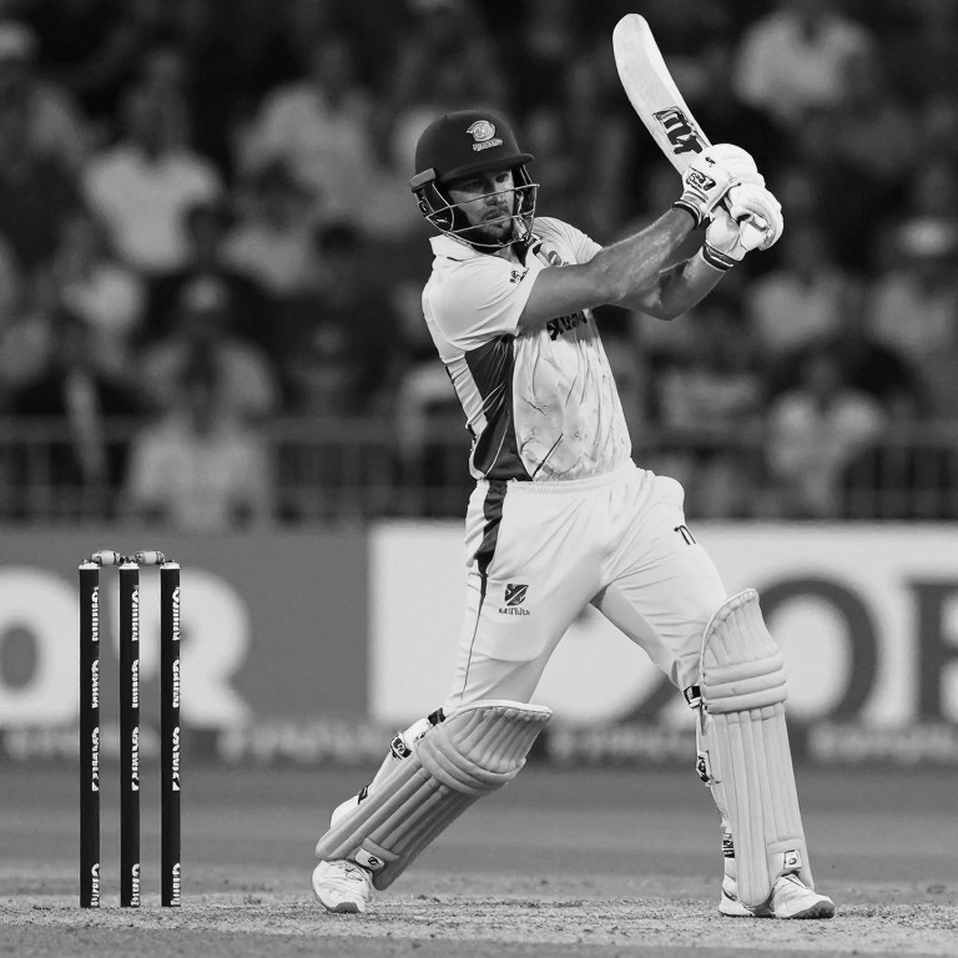
The grid is my conscience: nine zones, no hiding places. In 2026, covering the Ranji final in Indore — when Parthiv Patel's Gujarat chased 312 to beat Mumbai — I made every analyst file coordinates with the copy. Since then the first line of a report is a coordinate, not an atmosphere. Day one at Mirpur has one: the pocket behind cover-point, where Warrican's ball kept landing outside the batter's shoulder, was the least occupied territory of the day. Bangladesh occupied the pitch; they did not generate runs from it. Russia 2026 made me a translator of space, not a seller of noise, and the distinction holds here — in a 2.88 innings, possession and output are two different ledgers.
Shadman's technical audit is straightforward. 219 balls, 99 runs, ten fours — a strike rate of 45.2. 40.4 per cent of his runs came in boundaries, one every 21.9 balls. He made 46.5 per cent of the team total. Through a T20 or ODI lens, 45 looks slow; on a slow subcontinental surface it is exactly the tempo a Test opener needs to blunt the new ball and push the game into the third day. Calling it a slow innings is a category error. This is his tenth Test fifty, the ordinary business of an established career rather than a breakthrough.
The day's real data story is concentration, not the century. One batter faced half the deliveries and made half the runs; 205 of the 213 came from five batters, with the lower order entirely untested. If Shadman falls in the first hour of day two, this innings has no structural buffer left. This is where the football vocabulary has to pay a translation cost: in cricket, occupying territory means nothing unless the balls consumed convert into runs.
Hridoy's innings belongs in a separate ledger. Roughly 81 balls for 42, a strike rate near 52 — clearly above the team tempo, exactly the counter-attacking role of a No. 5. But a body breaking down in that heat is a bigger question than 42 runs; reaching a stretcher is not routine fatigue, and it directly affects the rest of his match. Litton's 28-ball 10, a strike rate of 35.7, is unusually sedate for a naturally aggressive keeper-batter, which suggests the light was already marginal before the formal stoppage — Bangladesh may have lost more effective batting time than the fifty minutes on record.
Warrican's day is the most diagnostically useful number. A left-arm spinner taking two of three wickets on the opening day says this is not a true first-day batting deck. It raises the value of 213 for 3 and simultaneously warns that the same surface will be far more expensive for Bangladesh in the third innings. On cost per output, Bangladesh paid 74 overs for 213 runs — 2.88 an over. In a draw-leaning Test that is an acceptable trade, but to reach 300 either Shadman bats to lunch or the lower order has to find a hundred.
Now the contrarian read the scoreboard hides. West Indies had a better day than three wickets suggest. They gave sixteen overs to the light, they were never allowed to reach the second new ball, and after the third wicket Bangladesh added substantially in the last session — evidence that on a slow, flat surface the attack lacked a hold enforcer. The ball Jayden Seales gets in his hands six overs into day two will be the hardest ball of this match so far, and standing in front of it will be a batter one run short of a century. The real Test pressure is not being built today; it is being scheduled for tomorrow's first hour.
One uncomfortable note must be filed. Bangladesh are in a strong position because of the venue and the weather, not because of the quality of their XI. Mirpur is their biggest structural asset — spin-led, low-scoring, attritional — and this innings is a textbook expression of that template. It proves nothing about their away prospects. Depth, meanwhile, has already been tested: with the No. 5 off the field, the wicketkeeper-batter is in a frontline role, and a retired-hurt batter can only be mitigated, never replaced.
An honest caveat belongs with the grid. Seventy-four overs is one day, not a pitch's character; confidence here stays medium. But the surface has not outrun the frame — the spinner is turning it from day one and the run rate has stayed attritional — so the diagram stands, provided we publish the sample size beside it.
Set three markers for day two. First, the first three balls of the 80th over: how much seam Seales finds and how Shadman protects his off stump. Second, Warrican's opening spell: whether he resumes the length that landed outside the fourth and fifth stumps. Third, the zone of Shadman's first boundary — square of the wicket means the pitch is slow and the innings will stretch.
The question is not whether 213 for 3 is a good score. The question is whether, if it becomes 240 for 5 by tomorrow afternoon, anyone will still call this a commanding position — or admit that at Mirpur the real currency was overs, not runs.