
NZ vs IND: Should Vaibhav Sooryavanshi Open Ahead of Sanju Samson? A Full Breakdown of Data, Risks and Blind Spots Before the 3rd T20I
तीसरे टी20 से पहले भारत के सामने सवाल है कि वैभव सूर्यवंशी को संजू सैमसन की जगह ओपनिंग दी जाए या नहीं। सूर्यवंशी का पावरप्ले स्ट्राइक रेट 228.26 बताया गया है, पर यह आंकड़ा अपुष्ट है, छोटे नमूने पर आधारित है और आईपीएल की सपाट पिचों का है — वेलिंगटन की हवा और नई गेंद के मूवमेंट में इसकी प्रासंगिकता सीमित है। दूसरे टी20 में भारत 11वें ओवर तक पांच विकेट गंवा चुका था और संतनेर ने 4/21 लिए थे, यानी असली समस्या मध्यक्रम में स्पिन के खिलाफ थी, पावरप्ले में नहीं। सैमसन का पावरप्ले (157.14) और पावरप्ले-बाद (158.17) स्ट्राइक रेट लगभग समान है, जो उन्हें हर क्रम पर उपयोगी बनाता है। भारत 2-0 से आगे है, इसलिए प्रयोग का समय उचित है, लेकिन तीसरे मैच को फैसला नहीं, परीक्षण मानना चाहिए। निष्कर्ष: बदलाव की दिशा तर्कसंगत है, उसका आधार कमजोर।
The third T20I of the five-match series between India and New Zealand is scheduled for Tuesday, 27 October, at Sky Stadium in Wellington, where the hosts will try to stay alive in the series and India will push for a 3-0 lead. India currently lead 2-0, giving them a firm grip on the series. But the loudest debate ahead of this match is not about the scoreboard; it is about the top of India's batting order — should young Vaibhav Sooryavanshi open instead of Sanju Samson?
The question originated in an opinion-based report that listed three reasons. But the data behind the question, its sample size, and Wellington's conditions all point in different directions. Limiting this debate to \"who should play\" would therefore be inadequate. It should be treated as a team-management question involving three things at once: data reliability, matchup arithmetic, and the welfare of a teenage player.
The series context and the root of the debate
India have the lowest-pressure window available to them. Being 2-0 up and playing the third of five matches makes this a low-risk opportunity. But the same fact limits the significance of the debate. If a change cannot affect the series result, its test remains shallow.
What fuels this debate is the commentary after the second T20I that the Indian top order \"struggled a bit.\" In that match Sooryavanshi came in at No. 3 and was dismissed for 4 off 8 balls. Using that single innings to conclude that he belongs at the top and that Samson should bat at No. 3 is the weakest link in the argument — one innings cannot decide a batting position.
What the second T20I actually taught
An inconvenient fact emerges here. In that match India had lost five wickets by the 11th over, and Mitchell Santner took 4 for 21. The damage therefore occurred not in the powerplay but in the middle overs, and against a left-arm orthodox spinner. The real problem was scoring against spin in the middle order. Yet the proposed solution is a powerplay batting-order change. Diagnosis and prescription do not match.
Looked at differently, this also becomes the debate's strongest side. If Samson is sent at No. 3, an experienced batter arrives before the point at which India lost wickets. On that reading the direction of the suggestion is not wrong, even if its reasoning is weak. The distinction matters: a conclusion can be right while its foundation is incomplete.
What the numbers say — and do not say
According to the figures cited in the report, Sooryavanshi's powerplay strike rate since IPL 2026 is 228.26, against Samson's 157.14. After the powerplay, Sooryavanshi is at 210 and Samson at 158.17. Notably, no source is given for these numbers and they are unverified — they should be read as claims, not confirmed facts.
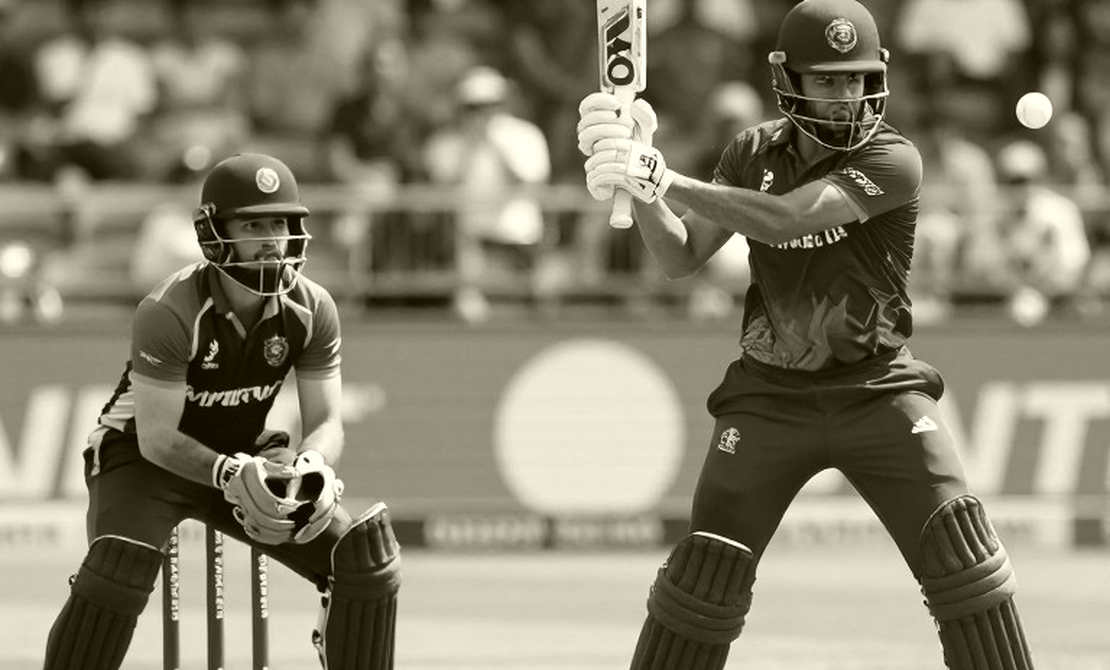
Even if accepted, they cut against the report's own logic. Sooryavanshi is faster in both phases. The second reason for keeping Samson lower is therefore qualitative — comfort against spin and experience — not statistical. The report presents it as a data-derived conclusion when it is in fact an opinion.
The bigger question is sample size. The report itself concedes that Sooryavanshi has \"far fewer innings\" and that the rate \"may settle lower over time.\" A powerplay strike rate of 150-170 is considered elite in T20; 228 is roughly 35-45 percent above that. The normal rule of statistics is that such extreme numbers revert toward the true level. Choosing an opener on that number is necessarily choosing a mix of noise and signal whose proportion is unknown.
Samson's 'phase-neutral' profile
The most solid and least discussed fact in the whole report is Samson's phase profile. His powerplay strike rate is 157.14 and his post-powerplay rate is 158.17 — a difference of about one run per hundred balls. That means his scoring does not depend on fielding restrictions. This is a genuine and useful structural fact that makes him adaptable to any position.
But the same fact says something else the report ignores: Samson is not a powerplay specialist either. If his scoring is identical in every phase, his real utility lies where the team needs stability — in the middle order, especially in a side that has just collapsed against spin. The No. 3 label looks like a half-measure; at four or five he may be more valuable to India.
The spin arithmetic: Santner and the left-hand angle
Here lies the most important and least assessed aspect of the debate. If Abhishek Sharma and Sooryavanshi are both left-handed, New Zealand have in Santner a left-arm orthodox spinner who will turn the ball away from both. No need to change the angle, no need to change the line — a consistent line is possible, and with only two fielders out in the powerplay it becomes even more effective.
The report does mention this risk but presents it as a minor caveat, when it is a structural cost. New Zealand's plan in the second T20I was exactly this — pressure through spin. They have no reason to change it. So there is a real chance Santner is brought on inside the powerplay specifically to test a new, inexperienced opener. In that case the experiment will be judged on a single matchup rather than on the batting order's structure.
On the other hand, \"Samson can handle Santner with ease\" is the claim the whole report rests on, and also the least evidenced one. No spin-specific strike rate, no matchup record. When spin was precisely the mechanism by which India lost the previous match, such a claim needed data behind it.
Wellington's wind, rain and DLS
The venue's role is entirely missing from the report. Sky Stadium is an open ground with strong winds, short straight boundaries, and movement for the new ball. Late October in Wellington is spring, with a high chance of rain and possible DLS. The wind affects both swing and the behaviour of a drop-in pitch.
This factor raises the risk of the proposal. A strike rate of 228 compiled on flat IPL surfaces with short boundaries is a completely different challenge against a new ball moving in the wind. And if the match is shortened by rain, the powerplay's proportional value rises — superficially favouring the proposal, but in that case the resulting data becomes useless. Drawing a structural conclusion from that one match becomes even harder.
Forced reshuffle or plan: the Ishan Kishan absence
Another point the report does not address — this entire reshuffle stems from a forced situation. Ishan Kishan's absence means India must fill a wicketkeeper-batter slot, and Samson is that option. This is not the product of a settled selection philosophy but an artefact of availability.
The distinction matters, because structural decisions taken under duress destabilise roles and are hard to restore. India's bench depth is precisely what makes the experiment possible — the quality from four to seven is high enough to try a less experienced option at the top. A mid-tier side could not take that risk.
The young player and workload management
The most sensitive aspect of this debate is not technical but developmental. Sooryavanshi's age is not confirmed in this information set, but at the age he is widely reported to be, this is the phase when technical adaptation against spin and movement is still forming. A public failure opening the batting in helpful overseas conditions therefore costs more than one match's result — it can shape a career's direction.
The report contains no fitness, injury-history or workload information for either player, yet recommends increasing the physical and psychological load on the less experienced one. Board-level workload protocols could override the suggestion anyway, and the report is silent on this.
Narrative versus expectation
The gap between media language and reality is clear here. An article headlined \"why he should open\" is being written when his international innings can be counted on one hand. That is itself a hype indicator. Meanwhile soft negative language such as \"the top order struggled a bit\" is being used after a single match — a mild panic signal.
Interestingly, the report's strongest argument is its quietest section, while its weakest argument is presented as the second pillar. Samson's near-identical phase strike rates are genuinely useful; \"he will handle Santner easily\" has no data behind it — and spin handling was exactly what cost India the previous match.
What to watch next
Three things will be worth watching in the third match. First, when New Zealand introduce spin — if Santner bowls inside the first six overs, the report's own acknowledged risk is directly tested. Second, how Sooryavanshi scores against spin — ball-by-ball matchup, not aggregate strike rate. Third, who occupies No. 3 once the absent player returns; that will reveal whether this was a plan or an artefact.
Conclusion
The direction of the suggestion is not entirely wrong — Samson's phase-neutral profile does make him useful at any position, and a 2-0 lead is a reasonable time to experiment. But the confidence with which the debate is presented is disproportionate to the available evidence. A powerplay strike rate of 228 is a small-sample number from a different environment; Santner's 4 for 21 is the most decisive fact from that match; and Wellington's wind, rain and DLS risk are entirely ignored. Treating the third T20I as a test rather than a verdict is therefore the more rational approach — and protecting a teenage player from outcome-based judgments is essential.