
Asian Cricket
Asia's Shifting Cricket Map: One Continent, Many Stories
एशियाई क्रिकेट अब एकध्रुवीय नहीं रहा। अफ़ग़ानिस्तान का तेज़ उभार, नेपाल और खाड़ी देशों का पेशेवर होना, तथा ACC के विस्तारित टूर्नामेंट कैलेंडर ने महाद्वीपीय क्रिकेट का शक्ति-संतुलन बदल दिया है। भारत की सबसे बड़ी बढ़त उसकी बेंच-डेप्थ और घरेलू ढाँचा है, जबकि पाकिस्तान के पास प्रतिभा है पर निरंतरता नहीं, श्रीलंका पुनर्निर्माण में है और बांग्लादेश ठहराव पर अटका है। असली चुनौतियाँ हैं — कैलेंडर का बोझ, मेज़बानी की राजनीति, एसोसिएट टीमों को मैचों की निरंतरता, और महिला क्रिकेट में निवेश की कमी।
The old way of understanding Asian cricket was simple: India, and then everyone else. For decades the story of continental cricket revolved around a single axis — how strong the Indian team was, and whether anyone could challenge it. But over the past few years that neat equation has slowly come apart. The rise of Afghanistan, Nepal's increasingly permanent status, the expansion of franchise cricket in the Gulf, and the constant restructuring of the Asian Cricket Council's (ACC) tournament calendar — together these have created a landscape in which the balance of power is no longer fixed but fluid.
The clearest reason for this change is structural. Cricket in Asia is no longer the property of five Full Member nations alone — India, Pakistan, Sri Lanka, Bangladesh and Afghanistan. Beneath them now stands a long and rapidly professionalising queue of Associate countries, which no longer have only enthusiasm but also high-performance centres, foreign coaches and domestic T20 leagues. Nepal, Oman, the United Arab Emirates, Hong Kong, Malaysia and Singapore — several of these teams are no longer 'surprise packages'. They are part of the calculation.
The Asian Cricket Council's structure has shifted in the same direction. Alongside the Asia Cup, the ACC now runs tournaments such as the Emerging Asia Cup, the Premier Cup and the Challenger Cup, whose purpose is not merely competition but giving lower-tier teams a continuous supply of international matches. The change looks small, but its impact is large: earlier, Associate teams would play two or three matches a year and vanish; now they have a continuous calendar. Performance comes only from continuity.
Against this backdrop India's position is the most distinct, and it is distinct because its gap is structural rather than technical. The Indian team's real strength lies not in any one superstar but in the depth of its bench. When an opener is out, he is replaced by a player who has already scored three thousand runs in domestic cricket. The pace-bowling rotation is so long that an entire separate trio can play a whole series. This depth has been produced by the combination of the Indian Premier League and the domestic structure, and it is the single biggest inequality in Asian cricket today — India has options, everyone else has compulsion.
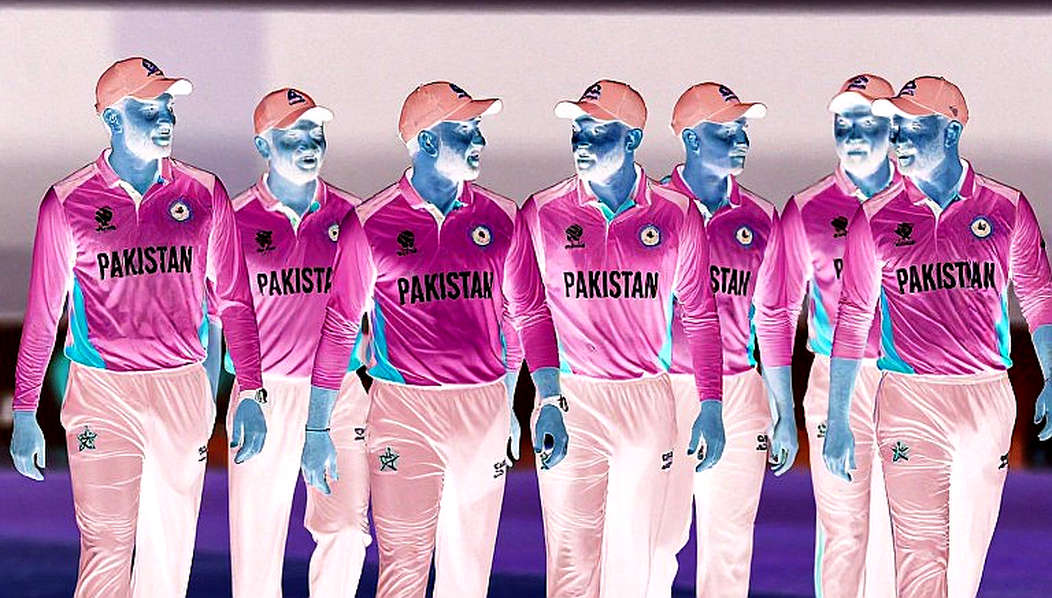
Pakistan is the most interesting counter-example. Its raw talent is no less than India's — a fast-bowling tradition, big-hitting batters, and in recent years improving spin options. But Pakistan cricket's problem has never been talent; it has always been consistency and system. A brilliant series win, followed by an inexplicable collapse in the next series — this pattern has repeated for two decades. Its roots lie in the selection process, the instability of the domestic structure and administrative churn. Until those three stabilise, Pakistan will remain a 'dark horse' in every tournament, but perhaps rarely a 'favourite'.
Sri Lanka is currently going through the most honest rebuild. Historic wins against South Africa and Australia showed that the team has youthful self-belief. But Sri Lanka's real challenge is away from home. In home conditions their spin and batting technique look excellent, but the same batters struggle on fast, bouncy pitches. Beyond that, economic pressure has pulled several senior players towards franchise leagues, affecting both the national team's calendar and player availability.
Bangladesh's case is the most tangled. Resources, facilities and a passion for cricket — it has all three. The domestic league is strong too. Yet in the knockout stages of major tournaments it consistently fails to take the step expected of it. A lack of depth in fast bowling, slow batting in the middle order, and a bowling plan that unravels under pressure — these problems have been the same for years. Bangladesh has everything a team needs, except that final mental leap.
But if this decade's biggest story belongs to any one team, it is Afghanistan. The pace at which Afghanistan has moved since gaining Full Membership in 2026 is almost unmatched in the history of international cricket. Beating teams like England, Pakistan and Sri Lanka at the ODI World Cup, and reaching the semi-final of the T20 World Cup — these were not coincidences. Afghanistan's hallmark is that it recognised its limitations and built a team around them. Despite having no home ground available, it made Sharjah and then Abu Dhabi its base and turned a spin-based bowling attack into a weapon. The trio of Rashid Khan, Mujeeb Ur Rahman and Noor Ahmad is a problem for any team in the world, and batters like Ibrahim Zadran and Rahmanullah Gurbaz have made the top order international class.
Among the Associate nations, Nepal's story is moving forward fastest. A huge base of cricket-loving spectators, a rapidly growing domestic structure and its own Nepal Premier League — Nepal has the three things other Associate countries do not. Players like Rohit Paudel and Sandeep Lamichhane have given the team an identity, and good performances on platforms like the Asian Games and the T20 World Cup have proved that Nepal no longer comes merely to 'participate'.
In the Gulf, the UAE and Oman are already established, while teams like Hong Kong and Malaysia are steadily improving. One major feature of these countries is that their teams are multinational. Players from the South Asian diaspora community form their backbone, which ensures a supply of talent but also raises questions about local development. That debate will only intensify in the coming years.
The biggest economic force binding this entire structure together is franchise cricket. The IPL is the financial centre of Asian cricket, but the Pakistan Super League, Lanka Premier League, Bangladesh Premier League, ILT20 and Nepal Premier League now together form a parallel economy. The direct effect is that players no longer play only for the national team but also for their careers. Incomes have risen, professionalism has arrived, but pressure on national-team availability has also increased.
This calendar pressure is today the most ignored problem in Asian cricket. On one side ICC global tournaments and bilateral series, on the other the ACC's regional tournaments, and on the third franchise leagues — all three must be borne by the same player's body. For fast bowlers this load is the most dangerous. Leading bowlers of several Asian teams have been out for long periods with injuries in recent years, and that is no coincidence.
In women's cricket, Asia's picture is far clearer than in the men's game — and far more unequal too. India's dominance is almost total, and most Women's Asia Cup titles have gone to it. But beneath that, Sri Lanka and Bangladesh have made solid progress, and Pakistan and Nepal too are strengthening their domestic structures. The question is whether Asian nations will invest in women's cricket as much as they do in the men's game. The answer so far: no.
Looking ahead, three things will decide which direction Asian cricket takes. First, the ACC's decision on how many matches it gives Associate teams — merely organising tournaments is not enough; they need consistent opportunities to play against bigger teams. Second, the question of the Asia Cup's format and hosting, which remains perpetually caught between politics and cricket. Third, and most importantly, investment in domestic structures. Afghanistan has shown that even with limited resources, a clear strategy can produce a giant leap.
Asian cricket is no longer unipolar. This is a continent where one team has an abundance of options, another has an abundance of talent but a shortage of system, a third has turned its limitations into strength, and a fourth is still searching for its identity. That diversity is the real appeal of Asian cricket — and perhaps also its biggest challenge.
संबंधित खिलाड़ी
अनुशंसित
118 in Six Overs, a 35-Ball Century, 199 Chased in 13.2 — India's Record Night in Wellington, and the Bowling Ledger Left Open2026-10-28
Abhishek Sharma's 35-Ball Century, India 3-0 Up: The Protocol File Behind a 118-Run Powerplay2026-10-27
Fourteen Empty Tabs and a Full Press Box: The Real Scorecard of Cricket-Asia Coverage2026-11-01
Abhishek Sharma 897, Marco Jansen 876: Two No.1s and the Column the ICC Table Doesn't Have2026-10-29
अनुशंसित
Mirpur's 213/3: Bangladesh's Resource Math Is Harder Than the Scoreboard Looks2026-10-29
Mirpur's Action, Chennai's Lab: Aliss Al Islam's Report Is a Bigger Question Than the Scoreboard Asks2026-10-29
113 off 38 in Wellington: Abhishek Sharma's Innings, Amritsar's Celebration, and the Incomplete Arithmetic of a Sixes Record2026-10-29
The Shifting Architecture of Asian Cricket: League Velocity, Test Drift and the New National-Team Puzzle2026-11-01
Five Matches, Zero Innings: The Empty Column Beside Suryavanshi's Name and the Unsettled Ledger of India's Selection Policy2026-10-22
The Changing Geography of Asian Cricket: The End of the Unipolar Era2026-10-31
अनुशंसित
NZ vs IND: Should Vaibhav Sooryavanshi Open Ahead of Sanju Samson? A Full Breakdown of Data, Risks and Blind Spots Before the 3rd T20I2026-10-28
The 87 Hidden Between Two Centuries: Auditing South Africa's 2882026-11-01
Pakistan Are Unbeaten, Not Strong: Lahore's 48th Over and Saim Ayub's Exit Without a Timeline2026-10-27
Chase Credits the Spinners, But the Mirpur Win Belongs to the Bowling Unit2026-11-01
Wellington's 118-run Powerplay: Abhishek Sharma's 38-ball century and the silence beneath India's series win2026-10-27
Abhishek Sharma's 35-Ball Century, India 3-0 Up: The Protocol File Behind a 118-Run Powerplay2026-10-27