
MI 2027: Pollard's coaching staff confirmed, Rohit's captaincy return remains speculation — a fact-check of the full story
मुंबई इंडियंस ने 2027 के लिए अपना कोचिंग स्टाफ आधिकारिक रूप से घोषित कर दिया है — कीरोन पोलार्ड मुख्य कोच, रॉबिन उथप्पा बल्लेबाजी कोच, टी. दिलीप फील्डिंग कोच, मिचेल मैक्लेनघन और धवल कुलकर्णी गेंदबाजी कोच; नीलामी 16 दिसंबर को गोवा में। लेकिन रोहित शर्मा की कप्तानी वापसी को लेकर जो खबरें चल रही हैं, वे पुष्टि नहीं, सिर्फ अनुमान हैं — किसी भी रिपोर्ट में नामित सूत्र या क्लब का बयान नहीं है। तिलक वर्मा को उपकप्तान बनाए जाने का भी कोई ठोस आधार नहीं है। हार्दिक पांड्या का ट्रेड 'बातचीत के स्तर' पर है, आधिकारिक नहीं। सबसे बड़ा अनदेखा सवाल यह है कि कप्तान बनने पर रोहित को इम्पैक्ट प्लेयर की सुविधा छोड़नी पड़ेगी, जो 39 साल की उम्र में उनके वर्कलोड प्रबंधन की रीढ़ रही है। असली परीक्षण रिटेंशन की घोषणा और हार्दिक के ट्रेड की आधिकारिक पुष्टि होगी।
Mumbai Indians announced their new support staff on Friday. Kieron Pollard will be head coach, Robin Uthappa the batting coach, T Dilip the fielding coach, and Mitchell McClenaghan and Dhawal Kulkarni the bowling coaches. That announcement came from the club itself. It is settled; there is no ambiguity about it.
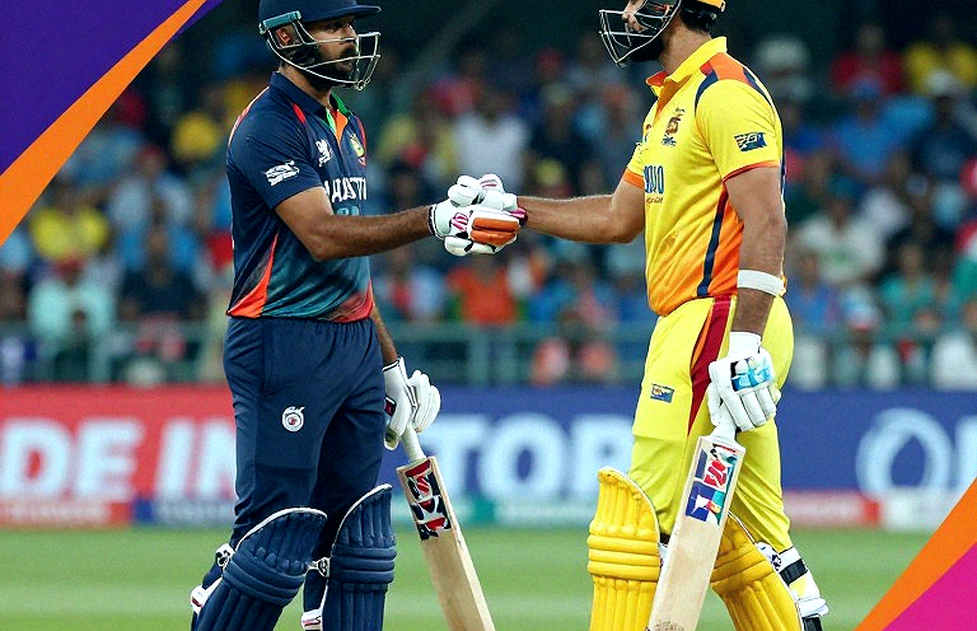
But a second story has started travelling alongside that announcement: that Rohit Sharma could take charge of Mumbai Indians again in 2027. That second story is not official. It cannot be described as a confirmation in any sense. It is a possibility, described in some reports as a 'strong possibility' — but those reports carry no named source and no club statement.
The distinction matters, because the fastest-spreading thing in sports media today is not fact but inference — and an inference repeated often enough begins to look like fact.
What is confirmed
First, the list the club officially announced: Kieron Pollard as head coach, Robin Uthappa as batting coach, T Dilip as fielding coach, Mitchell McClenaghan and Dhawal Kulkarni as bowling coaches. Separately, the auction will be held in Goa on December 16.
The retention decision is the next nearest waypoint on the timeline. The auction is on December 16, which means retention has to be announced before that. Whatever speculation exists about the captaincy will face its first concrete test in that announcement. If Rohit is retained and his name is put at the front of the captaincy conversation, the story will move forward. If not, the entire debate will have been air.
What is only speculation
Rohit Sharma returning to the captaincy currently sits in the realm of inference. And Tilak Varma being made vice-captain has almost no visible basis at all, beyond the fact that he is a rising star. 'Rising star' is not an argument for making someone vice-captain; it is a post, a responsibility, and it demands evidence of both cricket and leadership.
The two claims should not be put in the same bag. The captaincy talk has at least one logical link behind it, whose weakness we will examine below, whereas the vice-captaincy claim is close to empty for now.
The Hardik Pandya trade: an intermediate tier
There is a third category between those two. According to reports, Hardik Pandya could be traded, and Mumbai Indians have approached three teams. There is even talk that an 'official announcement is expected soon'.
But note: there is no mention of which team Hardik would go to. And until the trade is officially announced, this too is information at the level of talks, not at the level of a deal. In professional cricket, talks also collapse — and sometimes the very act of making talks public is a pressure tactic.
One more thing needs adding here, and it found no place in the coverage: the Hardik trade and the captaincy decision are linked to each other. If the trade happens, the captaincy falls vacant and the path for Rohit's return clears. If the trade does not happen, the question becomes how the dressing room functions around a player who was removed from the captaincy and whom the franchise is trying to trade. That sequence is entirely absent from the report — and it is the biggest interpretive gap.
The biggest hidden question: the Impact Player
One fact is written in a very casual tone in the report, when in reality it is the hinge of the entire story: Rohit Sharma has been playing as an Impact Player for the past two seasons. And the rule is clear — a captain cannot be an Impact Player.
Understand directly what that means. For a 39-year-old, the Impact Player route is not a technical workaround; it is workload management. It means he does not have to field for the full 20 overs every match, he can focus his energy on batting, and the load on his body stays lower.
Being captain means: a place in the playing XI, and responsibility for the whole match — field settings, talking to bowlers, DRS, decisions under pressure, and 20 overs in the field. In other words, if Rohit becomes captain, the club is asking him to give up the very mechanism that allowed him to play consistently over the past two seasons. That is not a small thing — that is the real cost.
And from here a second question is born, about which the report is entirely silent: is Mumbai Indians prepared to accept that cost? Or does this very fact suggest that the 'captaincy' offer is not actually a full-season playing-role decision, but a symbolic arrangement — a farewell season, an emotional send-off, and the commercial value that comes with it?
The question matters for another reason: if the captaincy is symbolic, then it must also be settled who the real captain is — who takes decisions on the field, and who holds responsibility if Rohit is unavailable mid-season. None of this is answered in the report.
How strong is the 'old associates' argument?
Now to the argument the whole story rests on. The structure runs roughly like this: several members of the new coaching staff have old ties with Rohit Sharma — T Dilip, Dhawal Kulkarni, Pollard, McClenaghan, Uthappa. Therefore the management is preparing the ground for Rohit's return. Therefore Rohit will be captain.
The weakest link is the middle one. 'The coaching staff has a good rapport with a player' and 'that player will be captain' have no necessary connection. The same appointments can be explained another way: Pollard is building a team he trusts; Mumbai Indians have always favoured its own former people; and even the claim about T Dilip sharing a close rapport with Rohit is phrased in the original report as 'believed to share a close rapport' — speculative language, not fact.
So an inference sits at the very foundation of the argument. Another inference has been stacked on top of it. And a conclusion has been drawn from that.
More importantly, the report makes no attempt to test the other side. What does Rohit himself want? What is the management's position? Which comes first, the Hardik trade or the captaincy announcement? None of this is asked. A one-directional argument has been declared complete.
The 'restoration of a dynasty' frame
The report's structure rests on a very recognisable narrative, one that can be called the 'restoration of a dynasty': first the great player — five titles, the run from 2026 to 2026; then power taken away — Hardik given the captaincy in 2026; then the empire collapsing — ninth place in 2026, six years without a title; then the old guard returning — a complete overhaul of the coaching staff; and finally the king's return — the captaincy, with Tilak as designated successor.
Note that the 'six years without a title, ninth in 2026' element is being used to legitimise the coaching change and the captaincy return. This is how 'the legitimacy of crisis' is manufactured — first prove everything has broken, then let the change become self-justifying.
This frame is highly favourable to Mumbai Indians' commercial narrative. Which is why one possibility cannot be ruled out: that the club itself deliberately floated this story to test reaction. Something like 'Tilak as deputy' is typically a signal management wants released in advance, not an independent find by reporters.
And remember this too: 'several members of the new support staff have close links with Rohit' — that sentence is true in itself. But framing it as 'evidence of a captaincy return' is the journalist's choice, not a meaning the fact carries on its own.
Fact-check and timeline
A few things deserve checking. Six years without a title — the title in 2026, then six empty seasons from 2026 to 2026. The arithmetic is internally consistent.
Rohit's age — born April 2026. If the report's timeframe is late 2026 and the auction is on December 16, then 39 is correct. But IPL 2027 runs between March and May, meaning he turns 40 during the season. The report writes '39' and avoids '40'. It is a small thing, but word choice reveals the direction of a story.
'Past two seasons as an Impact Player' — this claim needs external verification. It is presented as fact in the original report, but there is no independent corroboration. For now it is more honest to place it in the 'to be verified' category.
There is no hard contradiction, but one sequence is missing: Hardik's trade is not yet official, while the captaincy is already being discussed. In the real world the two are deeply coupled — what happens in the dressing room if the trade falls through is a question the report never raises.
What information is missing
Whether Rohit himself wants the captaincy, and what his retirement plans after 2027 are — this determines whether it is a 'return' or a 'farewell'. Mumbai Indians' official position on the captaincy — this is the line between speculation and decision. Who the counterparty is in the Hardik trade and what comes back — this would clarify the logic of the squad rebuild. Any concrete basis for Tilak as vice-captain — currently the evidence is close to zero. And most importantly: an entirely new coaching staff, a captaincy change and a major player trade are all happening at once — what the integration risk is gets not a single word. What the Impact Player rule means for the balance of the XI — the most practical question of all, and the most ignored.
What to watch next
If you want to track this story, remember three waypoints. First, the retention announcement, which must come before the December 16 auction. That is where it becomes clear whether Rohit stays at the franchise, and in what role. Second, the official announcement of the Hardik trade. That will give the clearest signal about the captaincy vacancy. Third, a direct club statement on the captaincy. Until that arrives, no report should be treated as confirmation.
The bottom line
What is confirmed right now is only the coaching staff. The captaincy is a possibility, and one resting on weak reasoning. The most important point, which found no place in the coverage, is this: a 39-year-old captain who must give up the Impact Player facility, an entirely new coaching staff, and a major player trade — all four changes are arriving together. The real risk is not 'will Rohit return'. The real risk is whether the team can absorb all four at once.
Asking that question is journalism. Everything else is inference — and inference should be called inference.