
Asian Cricket
The New Geography of Asian Cricket: Money, Politics and the Olympic Triangle
एशियाई क्रिकेट का केंद्र भारत है, जहाँ आईपीएल और घरेलू बाज़ार वैश्विक कैलेंडर तय करते हैं। भारत-पाकिस्तान द्विपक्षीय सीरीज़ नहीं होती; दोनों टीमें केवल आईसीसी और एशिया कप जैसे टूर्नामेंटों में मिलती हैं, कई बार तटस्थ वेन्यू पर। खेल के मैदान पर भारत की गहराई सबसे बड़ी है, अफ़ग़ानिस्तान सबसे तेज़ी से उभरती टीम है, जबकि पाकिस्तान और बांग्लादेश प्रशासनिक अस्थिरता से जूझ रहे हैं। 2028 लॉस एंजिल्स ओलंपिक में टी20 क्रिकेट की वापसी से नए एशियाई देशों को वैश्विक मंच मिलेगा, और महिला फ़्रैंचाइज़ी क्रिकेट इस क्षेत्र में सबसे तेज़ी से बढ़ता क्षेत्र है।
For the past several years, any conversation about Asian cricket has tended to orbit a single match — an India-Pakistan clash, an Asia Cup final, or a thrilling IPL night. But behind that glare sits a slower, structural churn that will decide, over the coming decade, on whose terms the game is played. It is not about the pitch and the bat alone. It is about broadcast rights, franchise calendars, political deadlock and a return to the Olympics. Asian cricket stands at an inflection point where its sporting depth and its financial weight are racing to outrun each other, and that race is the real story.
Start with the economic centre. India's share of global cricket revenue is so large that every major plan at the International Cricket Council has to be read in that direction. The IPL's media rights run into billions of dollars, and the tournament is no longer a domestic league but the gravitational centre around which the rest of the global calendar is arranged. When a single league carries that much financial force, it is natural that bilateral series lose both value and space. None of this is a conspiracy; it is the plain arithmetic of market size. And that arithmetic is, at once, Asian cricket's greatest strength and its most nagging worry.
Second, the calendar. The IPL window appears to widen a little every year, squeezing bilateral series on either side. For many boards, bilateral cricket is now a revenue instrument first and a prestige event second, and for smaller boards the arrival of a major tour is the only real path. The pressure lands on the players. Fast bowlers break down, travel piles up, and rest is demanded ahead of major tournaments. When the top players move through three formats across a year without a real off-season, injury stops being coincidence and becomes a logical output of the schedule. That is why player bodies and boards are now openly fighting over workload.
Third, and most sensitive, is politics. India and Pakistan have not played a bilateral series for years, meeting only in major ICC events. The consequences spill well beyond those two countries and shape the entire Asian calendar. To manage this reality, the Asia Cup and some ICC events have leaned on hybrid models, with matches staged at neutral or alternate venues. Administratively it is a workable compromise; for fans it is rarely convenient or satisfying. When the game's biggest fixture is decided on neutral ground, the question is not only about logistics but about the spirit of the contest itself.
On the field, the picture has shifted too, and it is no less interesting. India has moved to a different tier in both scale and depth — the bench is now so strong that transitions barely register. That strength is not merely the achievement of one generation; it is the compound return on domestic structure, franchise cricket and sustained investment in the junior pathway. When a side has two credible options in every role across all three formats, its strategic room is simply larger than everyone else's, and over long tournaments that room becomes the margin.
Pakistan's story is the opposite and the most poignant irony in the region. The talent has never been in short supply — the fast-bowling lineage, the flair in the batting, the intensity of the fan base all remain — yet administrative instability, an inconsistent domestic structure and a limited supply of international fixtures have stalled the momentum everyone expected. The return of international cricket to Pakistan in recent years is a genuinely welcome shift, but it is not a complete fix. Security arrangements, event capacity and the uncertainty that visiting sides attach to tours still shape performance directly.
Bangladesh is a different case. At home it can unsettle anyone, and on spin-friendly surfaces its attack has repeatedly tested the composure of major batting line-ups. Away from home, consistency remains elusive, and the signals keep pointing to reform above the playing level — in selection, contracts and domestic structure. When the framework changes every few seasons, the thing players need most, continuity, is the first casualty.
Sri Lanka's patience through an economic crisis is a story in itself. Despite scarce resources, political turbulence and at times a cramped calendar, a young generation has emerged that keeps demanding a place on the big stage. One of the clearest lessons of Asian cricket is that courage on the field and the health of administration do not move along the same line.
The real hope in this landscape is Afghanistan. A few years ago the side was a subject of sympathy; today it is a team that major tournaments cannot afford to take lightly. The quality of its spin bowling, its growing patience with the bat and the experience of franchise leagues have lifted it quickly. It proves that in Asian cricket the spread of talent can outrun the spread of money — provided talent gets a platform to play on consistently. That condition will be the argument that matters most.
The growing presence of countries such as Nepal belongs to the same story. When newer nations get a place on the biggest stages, the geography of the game changes — audiences, sponsors and future players all find a new route. Expansion is no longer confined to South Asia; there is credible potential across the Gulf, East Asia and Southeast Asia. Where leagues exist, academies follow; where academies exist, local talent grows. In Asia, that cycle is now turning in several places at once for the first time.
Then comes the part with the longest reach: cricket's return at the Los Angeles Olympics in 2028. In the T20 format, it is not just another tournament for several Asian nations but a new arena in which to establish themselves. The most important effect of Olympic recognition is on the assumption of whose game this is. It is a chance to break the misconception that cricket belongs only to a handful of countries and that its future sits only in their hands. The Olympic framework also brings discipline: a cleaner calendar, a defined qualification route and a path for nations that have no guaranteed place in ICC events.
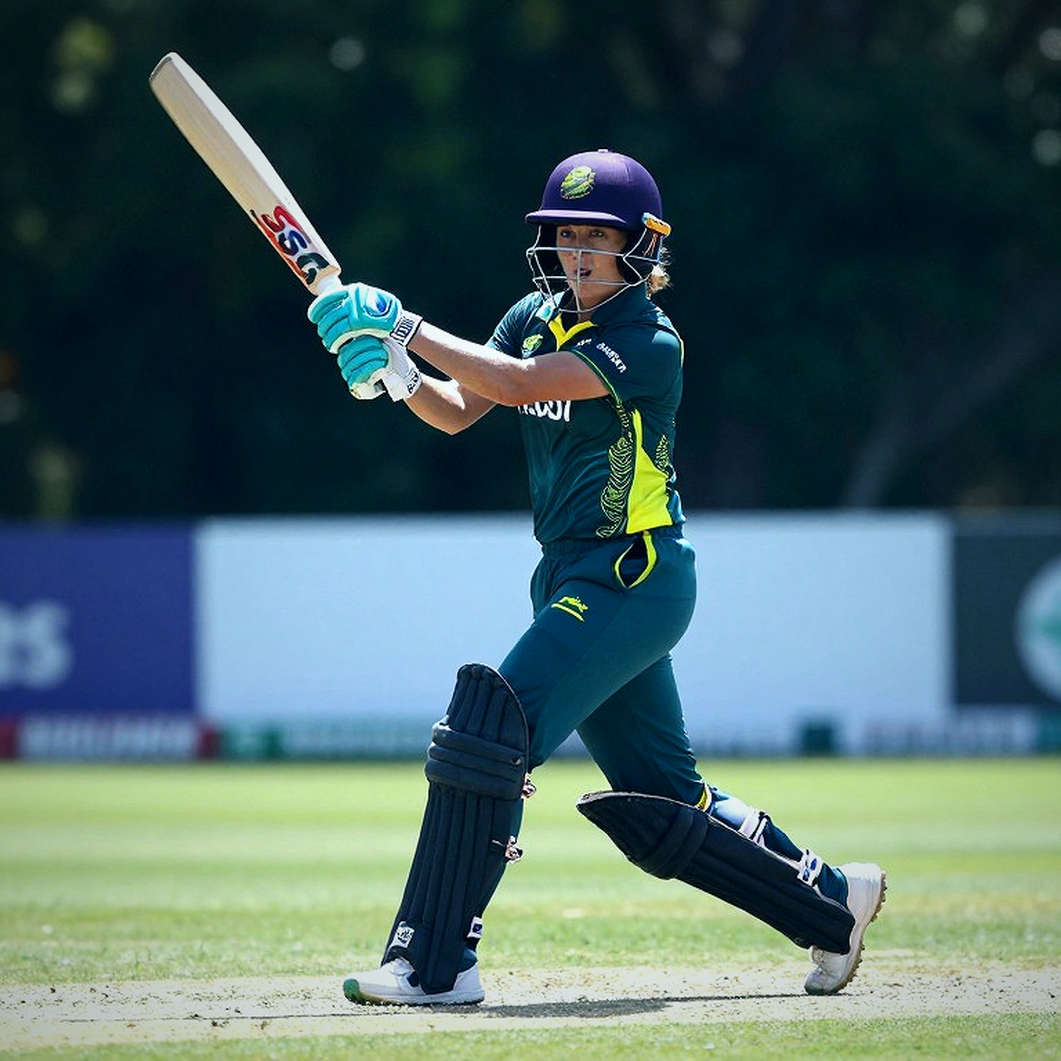
Women's cricket is the fastest-moving part of this picture. The domestic women's franchise league has not only given new players a stage but changed viewing habits, with women's matches treated as the main event rather than an appendix. Investment, coverage and standards have risen together, and the shift is remarkable even when measured against the scale of the men's game. In the Asian context it matters more, because women's sport has long been held back here by cultural excuses that are finally wearing thin.
Yet there is a warning embedded in all of this. When financial power settles in one centre, decision-making tends to contract with it. The future of Asian cricket depends on whether that concentration converts into the growth of the sport or merely the growth of a market. Fewer bilateral fixtures, limited opportunity for smaller nations and a rising workload on players are all signs that the model should be measured by competition as well as by revenue.
The next decade will be decisive. On one side, the Olympic door is opening and new markets are forming; on the other, calendar pressure, political deadlock and administrative inequality could narrow that door. If Asia can convert its financial weight into the decentralisation of the game, the benefit will not be limited to one continent. If it cannot, Asian cricket will settle into a centre of its own making where profit grows and contests thin out.

संबंधित खिलाड़ी
अनुशंसित
The Empty File: The Cricket Story That Never Reached the Server2026-10-22
Ishan Kishan Breaks Suryakumar's Record: Most T20 Runs by an Indian in a Calendar Year2026-11-02
India vs New Zealand, 5th T20I: Series already sealed, India look to learn from the Eden Park defeat and finish on a winning note2026-11-02
118 in Six Overs, a 35-Ball Century, 199 Chased in 13.2 — India's Record Night in Wellington, and the Bowling Ledger Left Open2026-10-28
Empty Data, Filled Template: The Biggest Risk in Asian Cricket Coverage2026-10-31
The Shifting Geography of Asian Cricket: Chasing Balance Between Calendar, Cash and Rising Powers2026-11-01
अनुशंसित
Five Matches, Zero Innings: The Empty Column Beside Suryavanshi's Name and the Unsettled Ledger of India's Selection Policy2026-10-22
Mirpur Day 1: The Scoreboard Reads 213/3, the Paperwork Reads Four Batters2026-10-29
Smith Joins the Ponting-Border Club on Australia's Day of Disaster2026-10-22
Eden Park's 260: Gambhir's 'Win Every Match' Mandate, Abhishek Sharma's 38 Balls, and the Question the Scoreline Never Asks2026-10-31
The Empty Ledger, the Full Truth: Why a Null Result Is a Cricket Data Desk's Strongest Report2026-11-02
Dhoni's 'Vintage Car' Line: The Ledger Behind the December Deadline, Not-Out Inflation, and CSK's Key-Person Risk2026-10-26
अनुशंसित
The Shifting Geography of Asian Cricket: Market, Calendar and the Rise of New Powers2026-11-02
Mirpur Day One: 213/3 Is Not Dominance, It Is a Structure Resting on One Batter — Shadman Unbeaten on 992026-10-29
Fakhar Zaman's 127 and a 326 Chase: What Lahore's Tri-Series Title Scorecard Says — and What the PCB Statement Leaves Out2026-11-01
Kishan's Adductor, Mayank's Silence — India's Real Ledger at the Second T20I2026-10-24
Ramesh Powar Joins BCCI Selection Committee: The 2027 World Cup Lens, But the Data Says Something Else2026-10-22
Report Not Published: Stage-1 Analysis Empty, No Verified Facts Available2026-11-01