
Ashraful handed batting coach role, says 'I want to give my best'
**एक नजर में:** बांग्लादेश क्रिकेट बोर्ड ने पूर्व कप्तान मोहम्मद अशरफुल को कतर में 19 नवंबर से शुरू होने वाले एसीसी एशिया कप राइजिंग स्टार्स से पहले बांग्लादेश युवा कैंप का बल्लेबाजी कोच नियुक्त किया है। मुख्य कोच सोहेल इस्लाम हैं। अशरफुल ने कहा कि वे अपना सर्वश्रेष्ठ देना चाहते हैं। **टूर्नामेंट तथ्य:** 8 टीमें, 50 ओवर फॉर्मेट, मेजबान कतर। ग्रुप चरण 19-24 नवंबर, सेमीफाइनल 26-27 नवंबर, फाइनल 29 नवंबर। ग्रुप ए: बांग्लादेश ए, श्रीलंका ए, अफगानिस्तान ए, हांगकांग। ग्रुप बी: भारत ए, पाकिस्तान ए, नेपाल, यूएई। बांग्लादेश ए का पहला मैच 19 नवंबर को हांगकांग के खिलाफ। टूर्नामेंट का सबसे बड़ा मुकाबला 22 नवंबर को भारत ए बनाम पाकिस्तान ए। **चयन नियम:** टीम राष्ट्रीय टीम से बाहर चल रहे क्रिकेटरों में से चुनी जाएगी; बोर्ड ने 'मजबूत टीम' बनाने का संकेत दिया है। स्क्वाड का ऐलान अभी नहीं हुआ, इसलिए ताकत का आकलन संभव नहीं। **महत्व:** यह आईसीसी रैंकिंग वाला पूर्ण अंतरराष्ट्रीय इवेंट नहीं, बल्कि एसीसी का 'ए' स्तरीय विकासात्मक टूर्नामेंट है। इसका प्रदर्शन सीधे टी20 या सीनियर राष्ट्रीय टीम के निष्कर्षों में नहीं बदला जा सकता। **जोखिम:** मुख्य संवेदनशीलता युवा खिलाड़ियों के सामने पूर्व-प्रतिबंधित व्यक्ति को कोच बनाने की छवि और नैतिकता से जुड़ी है (सार्वजनिक रिकॉर्ड: 2013 बीपीएल स्पॉट-फिक्सिंग प्रकरण में प्रतिबंध)। खेल-प्रदर्शन का जोखिम सीमित, क्योंकि इवेंट विकासात्मक है। **स्रोत नोट:** रिपोर्ट एक ही स्रोत (ढाका पोस्ट) पर आधारित है; 'राष्ट्रीय टीम से हटाया जाना' जैसे शब्द ढीले हैं और इन्हें हाल की प्रदर्शन-आधारित बर्खास्तगी नहीं समझा जाना चाहिए। नियुक्ति की पुष्टि आधिकारिक बीसीबी स्रोत से करनी चाहिए।
Dhaka: Ahead of the ACC Asia Cup Rising Stars in Qatar starting 19 November, the Bangladesh Cricket Board (BCB) has handed former national captain Mohammad Ashraful a batting-coach role in its youth camp. According to a Dhaka Post report, Ashraful said after receiving the responsibility that he wants to give his best and wants to justify the trust the board has placed in him.
The appointment comes at a time when Bangladesh's senior side is in transition and the board is in the process of assessing a large pool of young and fringe players. Sohel Islam is the head coach of the camp.
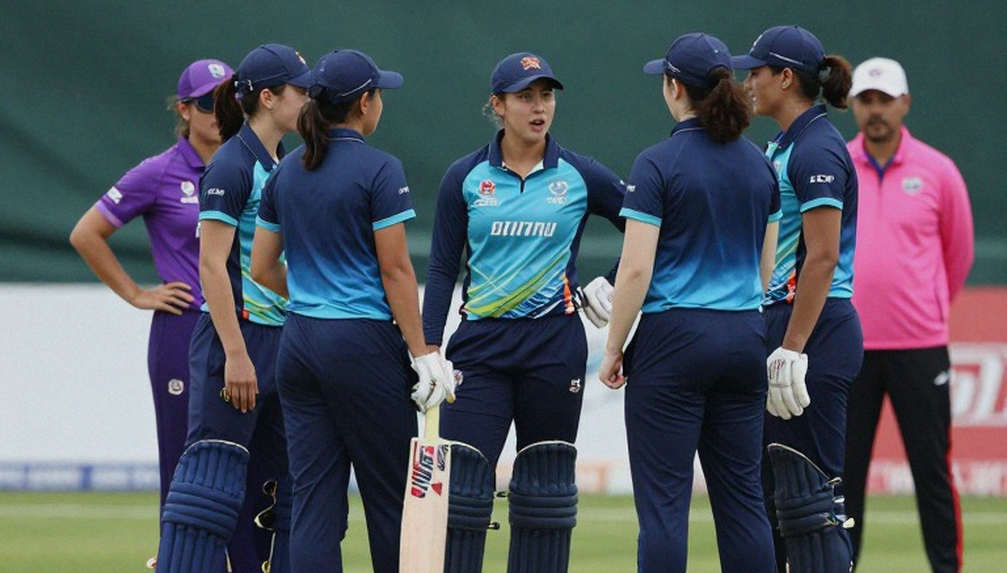
Tournament framework
The ACC Asia Cup Rising Stars is an eight-team 50-over tournament to be played in Qatar. The group stage runs from 19 to 24 November, the semi-finals are on 26 and 27 November, and the final is scheduled for 29 November.
Group A comprises Bangladesh A, Sri Lanka A, Afghanistan A and Hong Kong. Group B has India A, Pakistan A, Nepal and the UAE. Bangladesh A open against Hong Kong on 19 November, the weakest link in the pool. The genuine tests come against Afghanistan A, whose young spin attack is aggressive and sharp, and Sri Lanka A, traditionally built on spin and finishing.
The tournament's biggest draw is not a Bangladesh fixture but the India A versus Pakistan A group match on 22 November, which will anchor the event's media and viewership attention.
Selection principle and board intent
The BCB has made clear that the squad will be picked from cricketers currently outside the national team. This is therefore a second-tier, fringe and developmental pool, not the senior national side. The board has also indicated it is thinking of forming a strong team, creating an interesting tension: it appears to want the event taken competitively rather than purely as development.
No squad has been announced yet, so batting depth, bowling combination and bench strength cannot be assessed. In that situation, the event should be treated as a talent-identification pipeline rather than a benchmark of strength.
What exactly is Ashraful's role?
Ashraful has been given a specialist batting-coach title, not an assistant or team-management role. That suggests a narrow, technical mandate: working on the technique, timing and tempo of young batters. It is also unclear who sets the batting curriculum between head coach Sohel Islam and Ashraful. That is a genuine ambiguity and should not be glossed over.
His statement — that he wants to give his best and that the board has given him responsibility — is a standard, low-information loyalty and recommitment line. It can be read as a motivational signal, but not as evidence of coaching competence. There is no public coaching record available; this is among his first or early formal youth-level appointments.
Background and sensitivity
According to the public record, Ashraful was once counted among Bangladesh's most gifted batters — among the youngest to score a Test century and a former national captain. He was later banned in the 2026 Bangladesh Premier League spot-fixing case and returned to domestic cricket only much later.
This information is not in the original report but is a matter of public record and is relevant to the context of the appointment. It means a person with a disciplinary history has been placed in front of young players. For the board, this is as much a rehabilitation and image-building step as a technical appointment.
Standard anti-corruption oversight at board level would be expected. The biggest risk is not the match outcome but the optics and ethics of the decision. The most likely scenario is that the appointment proceeds without incident, given that his return to domestic cricket has already happened. The most positive scenario would be the role becoming a successful rehabilitation model and a precedent for reintegrating sanctioned players into the coaching system.
Why the 50-over format matters
This is a 50-over tournament, not T20. Performance here cannot be transferred directly to T20 cricket. A young batter who does well must be re-assessed in a T20 context before any conclusions about the national T20 side are drawn.
Technically, a 50-over innings splits into two phases: building for the first 35 overs and accelerating in the last 15. The powerplay (overs 1-10) brings new-ball swing and seam, the middle overs (11-35) are about spin control, and the last ten overs (40-50) demand a balance of yorkers and big hitting. These three phases are the core lessons for a young batting coach.
Qatar is a neutral Gulf venue. Its pitches are generally flat and dry, assisting spin. In day-night matches the dew factor becomes important: evening moisture reduces spin grip and favours the chasing side. That is an inference based on venue type, not stated in the original report.
Industry and commercial context
This is not a franchise league event. No broadcast-rights figures, player salaries or auction mechanism are available. It is a board-controlled ACC competition, entirely outside the commercial auction ecosystem.
Its real industry value lies in the talent supply chain. An 'A'-level tournament is a discovery pipeline towards national selection and the most accessible platform for players outside the national side. It is also a small coaching-education pipeline: placing a former international in a youth-coach role.
One commercial aspect of the appointment is clear: attaching a big name to draw attention to a tournament that would otherwise get little media coverage. This is a name-power effect and a low-cost, high-visibility move for the board. But it does not raise the tournament's actual competitive significance.
How justified are the expectations?
The current story is personality-led, not event-led. Media attention is on Ashraful's comeback, with the tournament as context. Since the available quote is low-signal, the narrative is running ahead of any evidence about his coaching ability.
The expectation gap shows at three levels. First, team results: the board signals a strong team, which may lead fans to expect a deep run, although no squad has been named. Second, the coach's performance: no coaching data exists. Third, the tournament's profile: a second-tier event with no ICC ranking weight.
The group stage runs across four to five match days from 19 to 24 November. That is a modest load, so fatigue risk is low for this event.
Risks and monitoring
The overall risk rating is low to medium, and it is almost entirely determined by one factor: the optics and ethics of appointing a previously sanctioned figure to coach young players. Sporting risk is limited because the event is developmental and a poor result would carry little direct consequence for the national team.
Geopolitical risk exists but is contained: India A and Pakistan A are playing in the same tournament under neutral hosting, which is part of the ACC's established arrangement.
Signals to track
First, the Bangladesh A squad announcement, which will clarify whether the board is sending a strong side or purely giving youth a chance. Second, the group results from 19 to 24 November, especially against Afghanistan A and Sri Lanka A, which could affect selection of fringe players. Third, Ashraful's coaching coverage and performance, where a batting success or controversy could push his rehabilitation path up or down. Fourth, any formal statement on integrity and anti-corruption.
Conclusion
This is a low-drama, single-source administrative news item whose real analytical substance lies in two things. One, a structured eight-team 'A'-level 50-over tournament in Qatar from 19 to 29 November. Two, the appointment of a gifted former star with a controversial past as batting coach to young batters — a move that is as much a rehabilitation signal as a technical decision.
One caution is necessary for readers and analysts alike. The report rests on a single source and uses loose phrasing such as being 'removed from the national team', which should not be read as a recent performance-based sacking. Appointment details should be confirmed with an official BCB source before being treated as settled fact.
And most importantly, this is a second-tier tournament. It should not be scaled up beyond proportion because of one big name. Expectations should stay proportionate to an 'A'-level competition.