
77 Teams, Five Continents and a Blank Column: The First Continental Chess Championship for Prisoners
**मुख्य उत्तर:** FIDE के Chess for Freedom कार्यक्रम के तहत 13–23 मई 2025 को कैदियों की पहली कॉन्टिनेंटल शतरंज चैंपियनशिप हुई, जिसमें पांच महाद्वीपों की 77 टीमों ने Open, Women's और Youth सेक्शन में हिस्सा लिया। **मुख्य तथ्य:** - आयोजकों के मुताबिक 77 टीमें, पांच महाद्वीप; आयोजन 13–23 मई 2025. - Open, Women's और Youth तीन सेक्शन; ज़िम्बाब्वे, अल सल्वाडोर, सर्बिया और भारत का ज़िक्र. - PGN, खिलाड़ी नाम, स्कोर, टाइम कंट्रोल और प्लेटफॉर्म उपलब्ध नहीं; तकनीकी स्तर असत्यापित. - शीर्षक में 'Intercontinental Online' और 'First Continental' का अंतर; फॉर्मेट की पुष्टि नहीं. - स्रोत: FIDE / Chess for Freedom इवेंट सामग्री; प्रकाशन तिथि स्रोत में नहीं दी गई. **स्रोत:** FIDE / Chess for Freedom इवेंट सामग्री, इवेंट तिथि 13–23 मई 2025; प्रकाशन तिथि स्रोत में नहीं दी गई। **संबंधित प्रश्न-उत्तर:** प्रश्न: क्या यह इलीट शतरंज टूर्नामेंट था? उत्तर: नहीं, यह FIDE का सामाजिक-प्रभाव वाला कार्यक्रम है; इसके मापदंड भागीदारी, समावेश और कार्यक्रम-निरंतरता हैं। प्रश्न: क्या 77 टीमें खिलाड़ियों की ताकत साबित करती हैं? उत्तर: नहीं, यह भौगोलिक पहुंच का संकेत है; रेटिंग और स्कोर के बिना प्रतिस्पर्धी गहराई नहीं मापी जा सकती। प्रश्न: अगली रिपोर्ट के लिए कौन-सा डेटा ज़रूरी है? उत्तर: सेक्शन-वार भागीदारी, एग्रीगेट स्कोर, टाइम कंट्रोल, प्लेटफॉर्म, सुपरविज़न ऑडिट और गोपनीयता-सुरक्षित पुनर्वास-आधारभूत सर्वे।
The first thing I noticed was not a move but a missing column. Between 13 and 23 May 2026, FIDE's Chess for Freedom initiative staged the first Continental Chess Championship for Prisoners. Organisers said 77 teams from five continents competed across Open, Women's and Youth sections; Zimbabwe, El Salvador, Serbia and India were singled out for standout performances. When I looked for the record, there were no PGNs, no player names, no scores, no time control, no platform details. A chess championship had lost the one thing chess cannot do without: the moves.
The silence in the stadium had a shape, and I spent years learning to read it. Here the stadium was not empty. The record was. In my trade, an empty record makes more noise than an empty stadium.
Chess in prisons is not new. Boards have been placed inside correctional facilities for years, in many countries, under many rehabilitation programmes. FIDE gave those efforts an institutional umbrella called Chess for Freedom. The 2026 event is being presented as the first continental milestone under that umbrella. It should not be confused with the elite World Championship cycle. The metrics here are participation, inclusion and programme continuity, not rating gain or prize money.
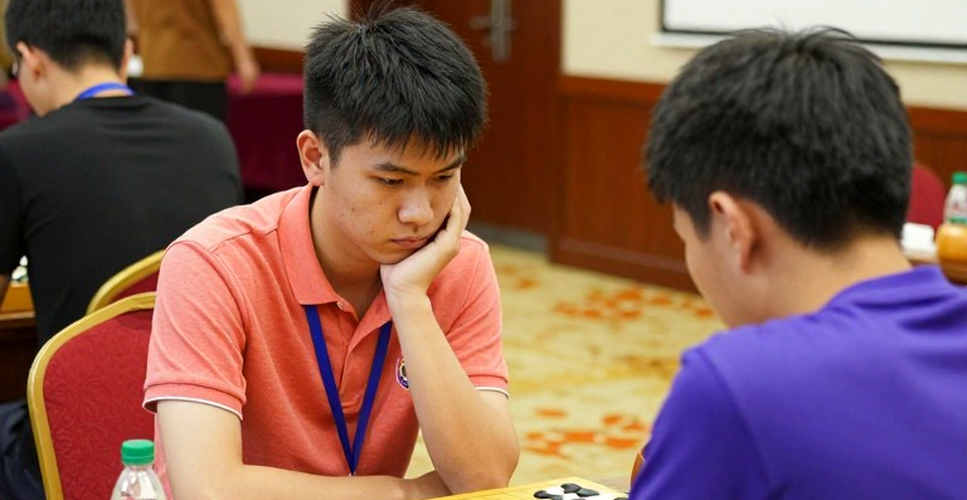
I watched the 2026 Bonn world title match from a night desk in Ahmedabad, logging every move on a spreadsheet. That experience taught me a useful rule: Bonn taught me that a quiet room is just a stadium with the sound turned off. A prison chess room is that kind of stadium—low noise, few cameras, almost no ambient crowd. I am not treating the quiet as neglect. Chess is naturally quiet. The question is whether the record is quiet too.
There is a second problem: the event's name. One title calls it the 'Intercontinental Online Chess Championship for Prisoners'; another calls it the 'First Continental Chess Championships for Prisoners'. That is not a small editorial slip. 'Online' and 'continental' describe different things. An online event raises questions about platform, local supervision, connectivity and anti-cheating. A continental event raises questions about geographic representation. Until organisers clarify, readers are left with two different tournaments in one story.
77 teams is a reach number, not a strength number. Getting 77 teams from five continents into one calendar is a logistical achievement. It means prisons, federations and local organisers coordinated across borders. But 77 teams do not prove that the field was strong. In an elite round-robin we look at PGNs, openings, ACPL, engine match rates and time controls. None of that is here. The organiser phrase 'high-level, organized tournaments' is a framing, not an independent measurement.
A field of 77 teams across five continents is almost certainly heterogeneous. Prison chess programmes differ in age, funding, coaching and local talent. Some teams arrived with institutional experience; others were sitting at a board for the first time. A single table of 77 teams proves participation, not competitive equality. That is not a defect. It is the nature of the event. Prison chess is designed for rehabilitation and inclusion, not elite performance. But reporting still needs its own standards.
A country name is a programme signal, not a rating. Zimbabwe, El Salvador, Serbia and India are mentioned, but no player names, scores, opponents or board results are given. It is impossible to rank those countries against one another. India's large chess ecosystem may make its prison programme easier to scale, but that is inference, not a sourced fact. Zimbabwe, El Salvador or Serbia may have strong local NGO, federation or prison-service involvement; the available material does not say.
The most quoted line may be the least sourced. The 'standout performances' claim arrives without a named source. This is the old transfer-window habit: a club statement and a reporter's line travel in the same package. The reader's filter is simple. FIDE-attributed numbers—77 teams, five continents, three sections, 13–23 May 2026—belong in one box. Evaluations such as 'standout performances' belong in another. Reading them as the same truth is where coverage goes soft.
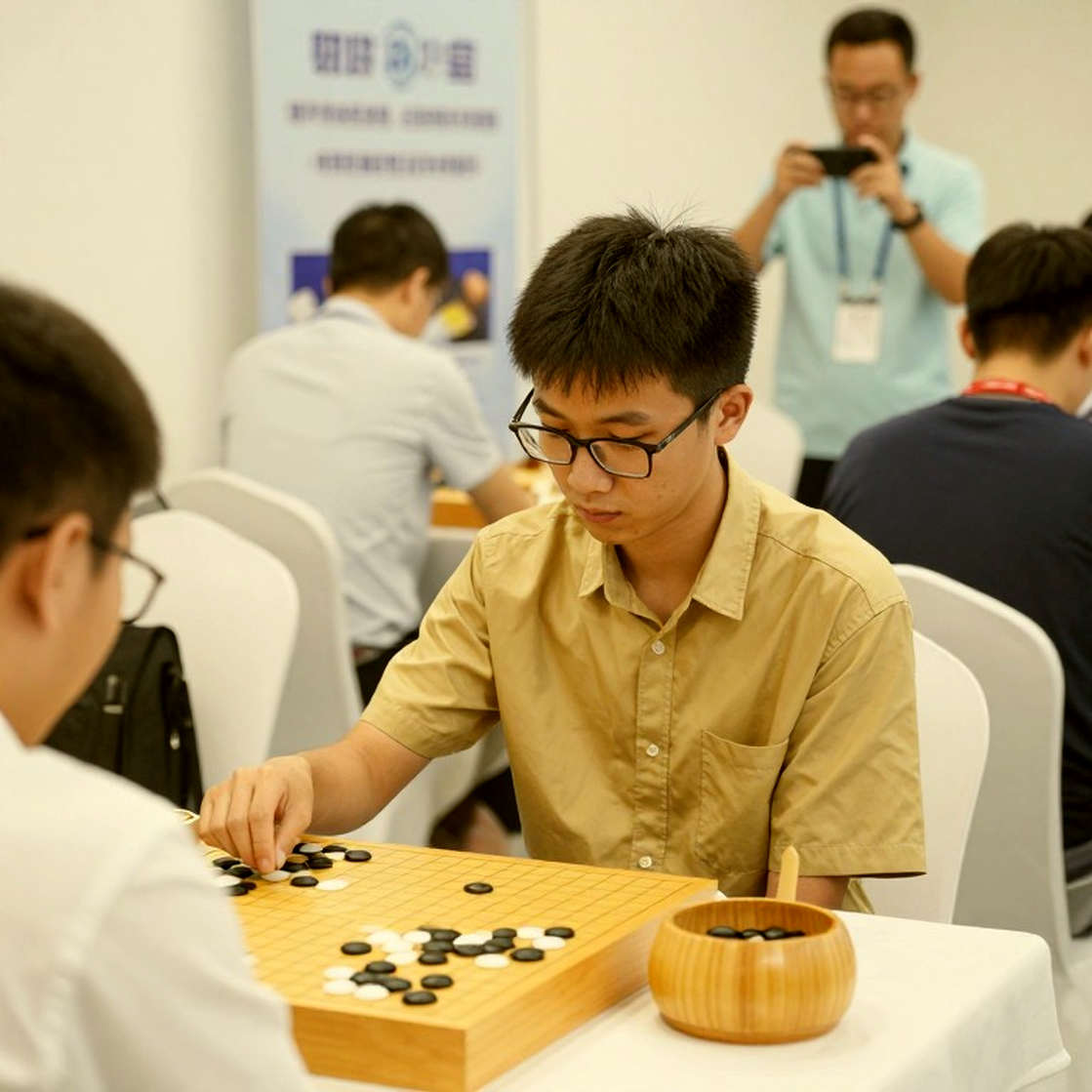
The title gap matters because it changes the integrity risk. If the event was online, the main danger is not opening preparation; it is local supervision. 77 teams, five continents, 11 days and three sections is an operationally dense schedule. Every prison hub needs a trusted supervisor, a device, a stable connection and a clean protocol. None of that is confirmed. An online prison chess championship is an infrastructure test before it is a chess test. If the event was not online, the title is wrong. If it was, the story is incomplete without the technical risk.
Three sections are a design intention. Open, Women's and Youth suggest that organisers wanted multiple entry points, not one open competition. A women's section matters in a prison context because female inmates are often under-counted in rehabilitation programmes. A youth section signals attention to younger prisoners. But there are no section-wise participation counts, no age eligibility rules, no retention data. Three sections are not evidence of retention. Adding categories is a start; keeping players engaged after release is a different challenge. An 11-day tournament cannot support a rehabilitation-impact claim on its own.
The absence of PGNs may be a privacy or security decision. Publishing prisoners' names carries risk. Many jurisdictions have strict rules about identity, offence history and prison security. Organisers may be right to withhold names. But privacy and opacity are not the same thing. The absence of public game records can be ethically correct and analytically costly at the same time.
The solution is not a name-and-shame data release. It is a privacy-preserving protocol: section-wise participation counts, aggregate team scores, anonymised board results, time control, platform, supervision audit and a baseline survey of rehabilitation outcomes. This event needs a privacy-safe audit, not a name-and-shame release. Such a framework would protect identities and still tell researchers how many games were played, how many were forfeited, where connectivity failed and which section had the thinnest participation.
Chess has solved distribution and not documentation before; this event repeats the pattern. Indian chess lived through a version of this after 2026: coverage grew, video grew, live streams grew, but the long-form written record of the Anand-to-Gukesh transition stayed thin. Prison chess faces the same risk. FIDE has a picture of 77 teams; it does not yet have the full scoresheet of 77 teams. I keep a notebook of matches that never happened, because those are the ones I remember. Many games from this tournament are heading into that notebook.
For FIDE, the event serves a social-licence purpose. It shows that chess is not only for 2700-rated players; it can reach people with very few resources beyond a board. No prize fund is mentioned. No broadcast value is mentioned. That is both the strength and the limit. This should be read as an institutional and social-impact milestone, not as an elite competitive tournament. But a social programme still needs measurement.
77 teams prove global reach, not global impact. Reach tells us how far a programme travelled. Impact tells us what changed after it arrived. Between the two lies a bridge of evidence: participation rates, dropout, recidivism, attitudes toward chess, prison administration behaviour. None of that data is available.
The consensus is that 77 teams from five continents prove chess's global social power. I would not accept that directly. The number proves administrative reach, not competitive depth or rehabilitation impact. To make the stronger claim, we need three things: section-wise participation, aggregate scores and an independent audit. We have none of them. If a contrarian reading needs three hedges to stand, it is a mood, not an argument. I would rather state the hedge and keep the argument honest.
There is another counter-intuitive angle. This event is not the 'biggest' in chess; it is the 'most different'. Different is an achievement. Putting boards inside prisons, aligning 77 teams on one calendar and creating three sections is a social-institutional innovation. But different is not the same as technically excellent. A social-institutional milestone does not automatically become a sporting-technical milestone. Selling both in one headline is the same mistake the transfer window makes when 'the club signed a player' becomes 'the club strengthened the team'. The signing is on paper; the strengthening is on the pitch. Here, the paper is 77 teams; the pitch is the scoresheet, which is not public.
If FIDE releases a privacy-preserving data pack before the next edition, the 2026 report can say who played, how they played and what changed. Not names, but aggregate scores. Not identities, but participation counts. Not private data, but a public audit. Then the event becomes a history rather than a photograph. Otherwise we will have a picture of 77 teams and no history of 77 teams.
The question is not whether 77 teams played. It is whether we will ever be able to say what they played. Until that answer arrives, the room stays quiet—and this time the quiet belongs to the record, not to chess.