
One Point Every 36 Seconds: PV Sindhu's Real Test in Paris Was Rally Length
**मूल उत्तर (≤60 शब्द)**: फ्रेंच ओपन 2026 महिला एकल फाइनल में पी.वी. सिंधु ने पहला गेम 21-16 जीता, फिर 11-21 और 12-21 से हारीं। एन से यंग ने आख़िरी दो गेम के 65 अंकों में से 42 जीते। 61 मिनट के मैच में 102 अंक बने — औसतन 36 सेकंड प्रति अंक, जो लंबी रैलियों और बढ़ते शारीरिक खर्च का संकेत है। **मुख्य तथ्य**: - फ्रेंच ओपन 2026 महिला एकल फाइनल का स्कोर 21-16, 11-21, 12-21; मैच अवधि 61 मिनट, कुल 102 अंक। - एन से यंग विश्व रैंकिंग में नंबर एक; रिपोर्ट के अनुसार यह इस टूर्नामेंट में उनका चौथा खिताब (सत्यापन लंबित)। - एन से यंग के साथ 11 मुकाबलों में पी.वी. सिंधु केवल दो बार एक गेम ले पाई हैं। - पी.वी. सिंधु का 2026 सीज़न: जुलाई में जापान ओपन सुपर 750 खिताब, अब फ्रेंच ओपन सुपर 750 उपविजेता। - सुपर 750 उपविजेता के लिए लगभग 9,350 रैंकिंग अंक, खिताब के लिए लगभग 11,000 (BWF मानक तालिका, सत्यापन लंबित)। **स्रोत**: मैच रिपोर्ट; प्रकाशक और प्रकाशन तिथि स्रोत दस्तावेज़ में दर्ज नहीं। शॉट-लेवल आँकड़े (स्मैश स्पीड, अनफ़ोर्स्ड एरर, रैली वितरण) उपलब्ध नहीं। **संबंधित प्रश्नोत्तर**: प्रश्न: क्या पहला गेम जीतना पी.वी. सिंधु की फ़ॉर्म-वापसी का सबूत है? उत्तर: यह सीमित संकेत है, क्योंकि अगले दो गेम में वे 23-42 से पिछड़ीं और यह क्षमता-निरंतरता का अंतर दर्शाता है। प्रश्न: पी.वी. सिंधु के लिए अगला सबसे बड़ा ढाँचागत लाभ क्या है? उत्तर: टॉप-8 सीडिंग, जो सुपर 750/1000 स्तर पर क्वार्टरफाइनल से पहले एन से यंग से भिड़ंत टालती है। प्रश्न: एन से यंग की जीत का सबसे सटीक पाठ क्या है? उत्तर: उन्होंने यह खिताब अपने औसत स्तर (फ़्लोर) से जीता, पीक प्रदर्शन से नहीं — पहला गेम शुरुआती ग़लतियों के साथ गँवाकर अगले दो गेम 10 और 9 अंकों से जीते।
In the third game the score was 9-9. The press tribune at Arena Grand Paris had already started writing — one laptop had the word “comeback” prepared, another had “collapse”. I was watching the chair, not the shuttle. P. V. Sindhu picked up her towel, reset her grip, walked back to the back of the court. Of the next fifteen points, An Se Young took twelve. 9-9 to 12-21.
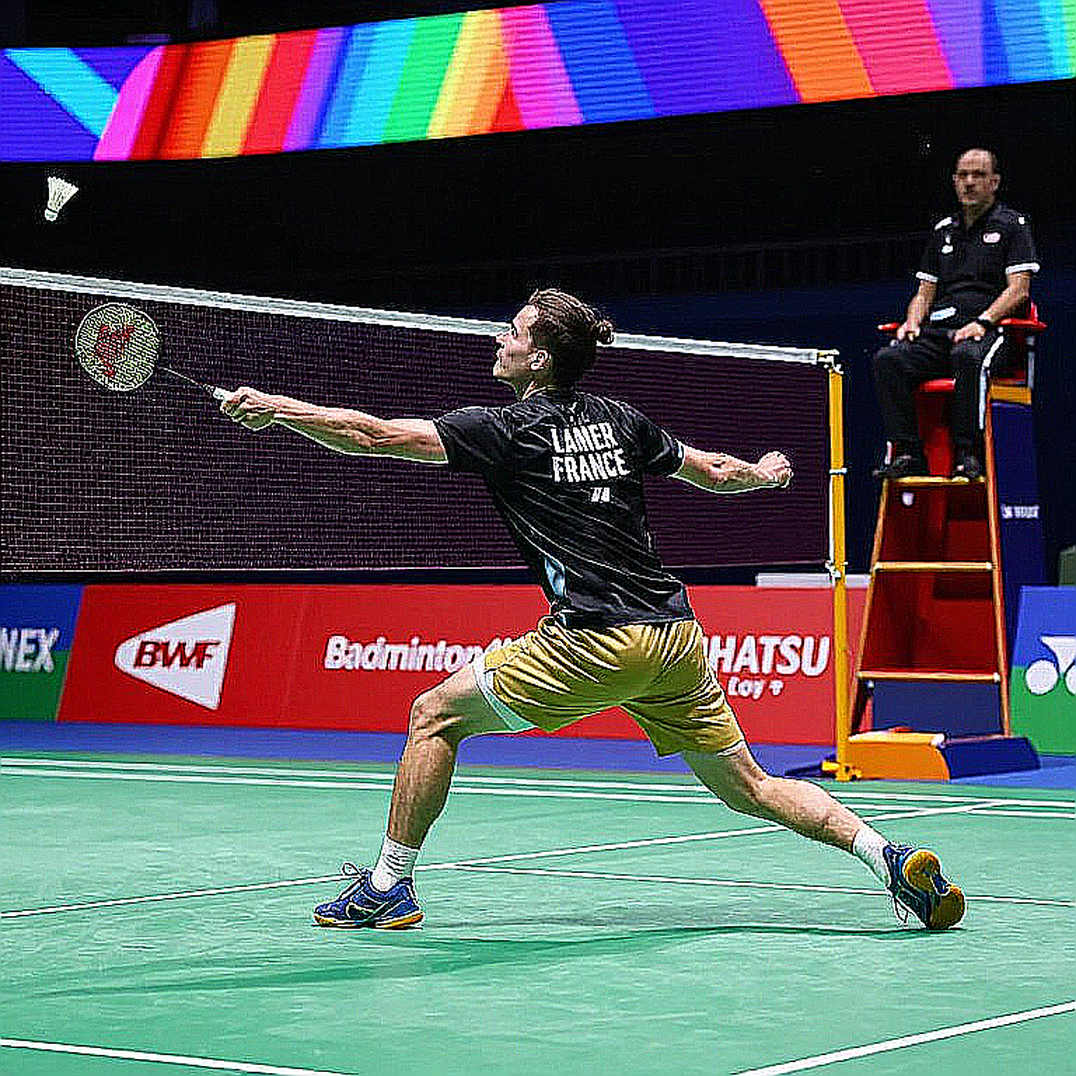
Thirty years of sitting courtside teach you that the most dishonest moment in a final is the one where the scoreboard has not yet spoken and the tribune has already decided the story. This final lasted 61 minutes and produced 102 points — an average of thirty-six seconds per point. That single number contains the match's whole politics. When a point costs thirty-six seconds, the question is not who owns the better shot; it is whose body can play one more rally at the same quality.
What was at stake
The frame was simple: 21-16, 11-21, 12-21, a BWF World Tour Super 750 women's singles final. Sindhu is thirty-one, facing the world No. 1, and 2026 is her most substantive season in years because it holds two Super 750 podiums — the Japan Open title in July and now this runner-up finish. Both results sit at the top tier, not farmed at Super 100 or 300 level. That is what makes the run serious rather than sentimental.
An Se Young is world No. 1, and the report files this as her fourth title at the same event. The figure is not independently verified, but if it holds, the meaning is plain: same hall, same drift, same court, protected top seeding — a structural advantage, not a coincidence.
Then the number that is the cleanest sentence in the whole story: eleven meetings, and Sindhu has taken a game in only two of them. That is not merely a losing record. It is a record in which she has rarely been competitive even at game level. Paris was the second time — real improvement, marginal improvement.
Calendar position matters too. This sits after July, inside the World Tour Finals qualification window and inside the annual fatigue period. For a thirty-one-year-old attacker, the points earned here will shape the next two months.
One transparency note. The match report names no source, and of smash speed, unforced errors, rally-length distribution and net-point win rate, none is available. The Super 750 points figures are pending verification. Everything below is a structural inference from the shape of the score, not shot-level evidence. I flag that boundary now because all of it must be read inside it.
Game one: a formula with a short shelf life
Sindhu won the opener 21-16, and won the 11-all to 21-16 stretch 10-5. The report calls it high intensity and sharp court control. Even without shot data, the implication for a tall attacker with a high contact point is obvious: interception in front of the net, flat attacking drives, and a refusal to give An Se Young the deep lift that switches on her defensive machine.
The formula works — and that is its weakness. It is a short-window formula. It depends on a high conversion rate generated around a moment like 11-all, before the opponent's retrieval length reasserts itself. Over one game it holds. Over three it demands the same trick twice more, and at thirty-one that demand is made of the body, not the game plan.
Game two: the tempo changed, not the form
An Se Young took the second 21-11, and the report credits her characteristic consistency and a long scoring run. A sudden spike in form rarely looks like that. This was cheaper and more efficient: a higher lift, an extended rally, forcing Sindhu to generate pace again and again. It is a defender's least expensive weapon, and her most costly one, because sustaining it for twenty points requires miles in the legs.
I offer that as an inference, medium confidence, since the rally-length distribution is missing. The shape of the score agrees with it: the second game produced only 32 points against the first game's 37, and 21 of them went to the Korean.
Game three: what happened after 9-9
Sindhu stayed level to nine-all. That is where the match was actually decided, and the report ties it to exceptional court coverage and defence. From 9-9 it was 12-3. In a match running at thirty-six seconds per point, that split of the closing fifteen points is not chance; it is an arithmetic of fatigue, and the arithmetic always favours the player who has to run less to score.
An Se Young's mechanism fired in two separate places — the long run in game two, the breakaway from 9-9 in game three. Both times the method was identical: she did not need to out-hit her opponent, only to extend the rally until the attacker's shot quality degraded. Against a thirty-something attacker, that is close to a structural counter.
The shape of the score says more than the result
Winning game one and then conceding 11-21, 12-21 is not a tactical loss. It is a capacity-and-consistency collapse. In a genuine near-parity matchup, the player who takes game one normally stays within three to five points in the games that follow; she can lose, but she does not fall like this. Here games two and three combine to 23-42.
Put plainly: of the 65 points played in the last two games, Sindhu handed 42 to An Se Young. The closing forty minutes were one-sided, and the one-sidedness came from rally length rather than any single brilliant shot. “She took a game off her” is true and therefore misleading — it shrinks a gap the scoreline widens.
Sindhu's own diagnosis is accurate, and that is the worrying part
She said afterwards that long rallies made converting opportunities difficult. That is an attacker's confession, and technically precise. It does not mean she failed to create; it means she reached the conversion point and could not finish. The problem was finishing power and shot selection under fatigue, not positioning.
That distinction is decisive, because at thirty-one a tactical adjustment can start on Monday; rebuilding finishing power under fatigue takes months and is not guaranteed. She also said there is a lot of space, a lot of room still there. That is psychologically healthy and analytically correct — a player who has not conceded the gap. It changes motivation. It does not change the physical curve.
Eleven meetings, two games
The head-to-head deserves the weight it carries. Two games taken in eleven meetings describes not one day's form but a style counter that has hardened into a psychological layer. When a player is not allowed to settle even at game level across that many meetings, scouting loses value; the mind reads the score before the shuttle is in the air.
At Gold Coast 2026, when Saina Nehwal beat Sindhu in the Commonwealth final, the tribune split into “Saina's revenge” and “Sindhu's collapse”. I filed 1,200 words arguing the all-Indian final was the sport's win either way and that the feud frame did both women a disservice; that piece became the seed of a biography and taught me to stop using rivalry as a plot engine. The same lesson applies here in reverse. Sindhu versus An Se Young is not a rivalry narrative; it is a style matchup. Writing it as a feud is cheap to both women and costs us the real question, which is how a limited style survives three games.
The seeding arithmetic
Per the standard BWF points table, a Super 750 runner-up finish is worth roughly 9,350 world-ranking points and a title roughly 11,000 (figures pending verification). Two such results build a seasonal base near 20,000 — a very solid floor.
What that buys is a top-eight seed, and a top-eight seed means no meeting with An Se Young before the quarter-finals at Super 750 or 1000 level. For a thirty-one-year-old attacker that is the single most valuable structural asset available right now — bigger than a new smash, bigger than a new strength program. Seeding is how a late-career player gets a gift from the draw, and the draw is what keeps her in semi-final contention.
The structure that stands in one building
All of this traces back further than one match. Sindhu's story, and Saina's, rests on a Hyderabad academy one man built by mortgaging his house. I do not want to diminish that achievement; I want to ask the question that follows it. Two decades of world-class Indian badminton stood on one city, one coach and one private risk. The pipeline and the bottleneck are the same building, and this Paris final was written from inside it.
India's three Olympic badminton medals — Saina's 2026 bronze, Sindhu's 2026 silver and 2026 bronze — were all won by women, all from the same coaching setup, in the country's most gender-equal big sport. The day India won the 2026 Thomas Cup, the first thing I noted in the tribune was that the men's team triumph received a scale of celebration the three individual Olympic medals never did. That is not a grievance; it is a ledger, and ledgers are kept by people who read both columns.
The uncomfortable turn
Two things about this match will be under-written and are the most true.
First, “she took a game off her” is the trap, not the achievement. Game one proves the formula can win a game; games two and three prove it currently cannot win three. Headlines take the first half because the second half requires looking at our own structures — coaching, load management, a three-game plan, and the data we do not keep.
Second, An Se Young won this title with her floor, not her peak. She lost game one with early errors, then won the next two by ten and nine points. A floor that high is frightening, but reading it as invincibility is both wrong and expensive. If the world No. 1 can be beaten over three games on an average day, the question is not who beats her; it is who owns a three-game plan. In Paris, one game was planned.
And the third unease belongs to my trade. How fast Sindhu's smash was at 9-9, how many unforced errors there were, what the rally-length distribution looked like — none of it is recorded. When the 2026 shutdown froze the World Tour and the Premier Badminton League went dark, I recorded fourteen oral histories with women shuttlers, from Aparna Popat to Jwala Gutta. Those voices hold deep knowledge of the game. They come with no dataset. That is why we still estimate our way through our own player's final, and why the shape of a score becomes our most reliable evidence.
Changing lanes
The real return, for me, was always in Saina — not in the result but in the capacity to author her own decisions. In 2026 she came home to Hyderabad after three years in Bengaluru, and the tribune called it a homecoming while wiser people called it a defeat. I stopped treating it as a loyalty test and started asking what an athlete actually controls. That shift is why a longer profile, and eventually a book, became possible.
The same applies to whatever support-team decisions sit behind Sindhu's 2026 season. Reading them as loyalty or betrayal is the wrong vocabulary. A move is not a transaction; it is a life switching lanes — and for a thirty-one-year-old with perhaps two or three seasons left, switching lanes is the most rational thing anyone can do.
Forward
The calendar is plain: the Finals qualification window, the season's fatigue, and a load-management question for a thirty-one-year-old attacker whose entire capital sits in footspeed and height. Sindhu says there is still room, and she is not wrong; two Super 750 podiums is a real season by any standard.
The real question is who will own the third game the next time An Se Young is across the net and the rally stretches to thirty-six seconds. No coach answers that alone. It comes from the structure that will still be standing the morning after the Paris final — the same structure that has spent two decades waiting on the stairs of a single building.