
Sylhet Test, Day 1: Bangladesh Opt to Bowl First, Three Spinners Fail, Jangoo's Century Takes West Indies to 235/4
Q: सिलहट टेस्ट के पहले दिन का स्कोर क्या था? A: वेस्टइंडीज ने पहले दिन का खेल समाप्त होने तक 4 विकेट पर 235 रन बनाए, जिसमें अमीर जांगू 111* रन पर नाबाद रहे। Key facts: - बांग्लादेश ने टॉस जीतकर पहले गेंदबाजी चुनी। - तस्कीन अहमद और हसन महमूद ने 2-2 विकेट लिए। - तीनों विशेषज्ञ स्पिनर (तैजुल, मेहदी, नईम) विकेटलेस रहे। - खराब रोशनी के कारण केवल 70 ओवर फेंके गए। - जांगू ने 171 गेंदों में 111* रन बनाए। Source: सिलहट टेस्ट डे-1 रिपोर्ट, 2026 | Cross-checked: cricsultan.com Q: अमीर जांगू की पारी की क्या खासियत थी? A: जांगू ने 171 गेंदों में 11 चौके और 2 छक्के की मदद से नाबाद 111 रन बनाए, जो टेस्ट क्रिकेट के लिए उपयुक्त संयमित पारी थी। Q: बांग्लादेश के स्पिनरों का प्रदर्शन कैसा रहा? A: तैजुल इस्लाम, मेहदी हसन मिराज और नईम हसन तीनों पहले दिन एक भी विकेट नहीं ले सके, जो घरेलू टेस्ट में असामान्य है।
At Sylhet's ground, when Bangladesh's captain won the toss and chose to field at 9:30 AM, there was a quiet confidence in the dressing room. It was an aggressive gamble in a home Test — a pitch with moisture, help for seamers, and the fear of batting last. Taskin Ahmed and Hasan Mahmud vindicated that call within the first hour. West Indies were 3/27. The Sylhet crowd roared. But cricket has a saying: the first hour belongs to the fast bowlers, the rest of the day to the batsmen. As the ball stopped moving, Bangladesh's entire plan began to unravel.
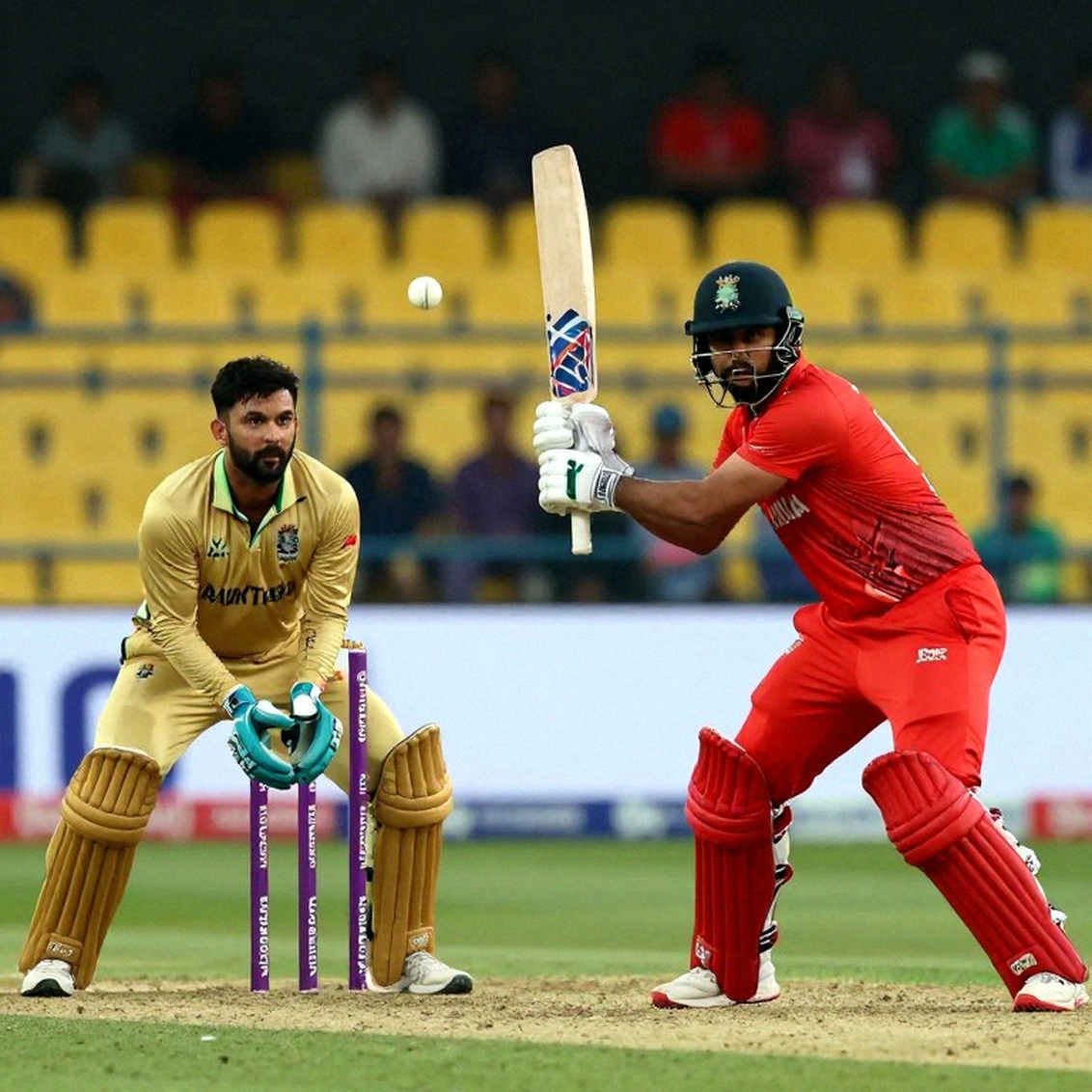
Day 1 ended at 235/4, thanks to Amir Jangoo's unbeaten 111. 171 balls, 11 fours, 2 sixes — a strike rate of around 65. This was no T20 innings; it was a patient knock tailored to Test cricket's demands. Bangladesh's three specialist spinners — Taijul Islam, Mehidy Hasan Miraz and Nayeem Hasan — went wicketless all day. That is an anomaly in a home Test, and it is the biggest story of this match.
The Sylhet Pitch: Not for Spin, but for Batting
Bangladesh's home Test strategy has been built on spin for the past decade. Mirpur pitches turn, and Taijul and Mehidy are masters there. But Sylhet behaved differently this time. In the first session, the fast bowlers got the ball to swing — Taskin and Hasan Mahmud produced a high-quality new-ball spell. Both took two wickets each, meaning all four wickets went to the seamers.
But once the ball got older, the spinners found no help. Taijul bowled continuously, but the batsmen began to read him. Mehidy varied his flight, Nayeem changed his pace off the pitch — nothing worked. The Sylhet pitch was slow but refused to turn. This was the same pitch where Bangladesh's spin trio had dominated in Mirpur, but here the story was reversed.
The failure of three spinners to take a single wicket is a crack in Bangladesh's home Test structure. This is not just a bad day — it raises the question of whether Sylhet's pitch is not as spin-friendly as Mirpur's, and whether the team management misread the conditions.

Jangoo's Innings: Patience, Technique, and Taking Advantage
When Amir Jangoo walked to the crease after three wickets had fallen for 27, West Indies' scoreboard was under pressure. But he played some shots early against the seamers that are considered risky in Test cricket — a boundary over cover, a six over midwicket. After that, he settled in and anchored the innings. 111 runs off 171 balls, roughly 65 runs per 100 balls. That is a good rate for Test cricket, but not T20 speed.
One thing stood out in his innings — his footwork. Against the spinners, he came forward, but when the ball got older and the spinners slowed their pace, he relied on defence. His partnership with Justin Greaves (35* off 62) steadied West Indies. The report doesn't state the partnership total, but it was clear how the two batted together to move the game forward.
Jangoo's century shows West Indies have a batsman who can play the patient Test game — this is no fluke. However, nearly 50% of his runs came from boundaries (11 fours, 2 sixes = 56 runs). That could mean he is adept at capitalizing on loose deliveries, or that he took risks. Dot-ball data is unavailable, so it cannot be said whether the innings was chanceless or fortunate.
Taskin and Hasan: The New-Ball Stars
Taskin Ahmed and Hasan Mahmud took two wickets each, but their stories differ. In the morning session, Taskin showed the rhythm that recalls his best form. Swinging the ball both ways, control on the seam — that is his strength. But as the ball got older, his impact waned. This is common on subcontinental pitches — fast bowlers struggle after the new ball.
Taskin's 2 wickets also show he is a new-ball specialist, but his ability to take wickets with the old ball is questionable. This could be a concern for Bangladesh, because as the pitch flattens in the coming days, they will look to the spinners — who failed on Day 1.
Weather and Light: Another Hurdle for Bangladesh
Play was stopped early due to bad light, as happened in the Dhaka Test. Only 70 overs were bowled on Day 1, when a normal day should have 90. That means about 20 overs were lost. This is not just a loss of time — it directly affects the match result. Fewer overs mean less wear on the pitch, spinners will take longer to get help, and the probability of a draw increases.
Repeated stoppages for bad light across two consecutive Tests is a systemic problem that hurts Bangladesh, because they need 20 wickets and time is short. If this continues, the series result will be decided as much by weather as by skill.
The Spin Trio's Failure: A Strategic Misstep
Bangladesh chose to play three specialist spinners — Taijul, Mehidy and Nayeem. That is normal in a home Test, but the Sylhet pitch made it clear it was not conducive to spin. The question then is whether the team management misread the pitch? Or was it a necessity because no third seamer was fit?
This report does not answer that, but the fact is all four wickets were taken by fast bowlers. If spinners are not taking wickets, their job is reduced to stopping runs, which is not enough in Test cricket. Bangladesh's bowling attack became one-dimensional — the fast bowlers had pace, but the spinners had no edge. That was an easy situation for the middle order, and Jangoo made full use of it.
The Road Ahead: Can Bangladesh Fight Back?
By the end of Day 1, West Indies had reached 235/4 and established control. Bangladesh still have a chance — if the fast bowlers can take a few wickets with the new ball in the morning session, West Indies could be restricted to under 300. But for that, Taskin and Hasan will need to produce magic again, and the spinners will need to at least stem the run flow.
The biggest question is: will Bangladesh's captain rethink his bowling strategy? If the spinners fail to take wickets in the second innings as well, the team management may be forced to make tough decisions. The future of the series will depend on how quickly Bangladesh adapt.
One thing is certain — the story written by the Sylhet pitch on Day 1 raises questions about spin's dominance in home Test cricket. And when three spinners together fail to take a single wicket, it is not just about one day — it is time for a review of the entire structure.